
Welcome to the Lower Cribden Avenue Book Club Page
This club was founded by Jean Smith at number 12. We meet three times a year with a rota for hosting. The hostess provides wine and very simple nibbles. Membership is open to anyone on the Avenue and any friends of residents.
The hostess makes a selection of five books for the next read and the group chooses one book and a list of individual preference books. We recognise that if the club grows too big for useful discussion we might need to split into two groups, but at the moment that seems unlikely. We are keeping a record of books read, with just a short synopsis of each meeting’s discussion. We have used the web to see others’ critiques. Please read all our book reviews lower down this page.
The next Book Club meeting is scheduled for Tuesday 20 January at 8.00 pm and will be hosted by Tracey at 25 Lower Cribden Avenue.
The books for Group review and discussion will be:'The Covenant of Water' by Abraham Verghese
Second Read: 'Shadow of the Wind' by Carlos Ruiz Zafón
********************************
The 59th Book Club was hosted by Priya on Wednesday 3 September at no 19 with all members present.
The first book for discussion was The Coffin Road by Peter May.
This was a gripping novel with wonderful descriptions of the characters
and places throughout. The pace was good and a satisfying conclusion
with enough twists to keep it believable. The story starts with a man
washed up on a deserted beach on the Isle of Harris. He has no idea who
he is or how he got there. The only clue to his identity is a map
tracing a track called the Coffin Road. It is with trepidation that he
knows he must follow that track. George Gunn’s detective work
investigating a murder and overcoming his limitations gives some light
relief. A teenage girl in her Edinburgh home is desperate to discover
the truth about her scientist father's death. It becomes apparent the
two are connected. The role of bees in climate change and the
unpredictable nature of amnesia have been cleverly utilised by the
author.
A good read highly recommended by most of us. However, one of our
members didn’t enjoy the book at all. The beauty of our lovely book club
is that we can agree to disagree.
Our second chosen book was What a Way to Go by Bella Mackie
This book was something completely different but what a lot of fun. A
quirky depiction of the afterlife, dark humour and snarky tone are
entertaining.
Anthony Wistern was a stinking rich business man, charismatic,
self-centred, agnostic, swindler with plenty of vices and secrets, dies
at his own 60th birthday party. A young sleuth decides to try and
discover who did it, which makes the investigation particularly
entertaining. The book gives voice to each family member giving their
thoughts about the deceased. The four siblings are unpleasant, rich
children and so self centred. His wife Olivia had all the wealthy
trappings but no love for their children. A very dysfunctional family
that appeared so glamorous. The characters were consistently over the
top, ridiculous really.
We enjoyed the romp through this story and was able to suspend belief
and take it all in.
An unanticipated entertaining book.
However more than one member disliked the book and thought it complete
rubbish..
One member read a third book: The Marriage Portrait by Maggie O’Farrell.
This story was set in medieval times in Italy, an utterly captivating
read. The characters are beautifully drawn and the scenery descriptions
vivid and authentic. The authors command of language is superb.
Lucrezia is a young noblewoman, married off at only fifteen to a Duke
who plays aristocratic power games. He is completely unpredictable with
a divided personality. You know from the first page of the book that he
intends to kill his young wife but there is an unpredictable clever
ending.
*********************************
The 58th Book Club was hosted by Wendy on Wednesday 7 May at no
14.
A smallish turn out due to various commitments but some excellent
discussions
The first chosen book was The Wizard of the Kremlin by Giuliano de
Empoli.
This was a very different political book, rather topical in this current
climate. A story told by Vadim Baranov, Putin's chief spin doctor who
was a TV producer and political adviser. He managed to turn the entire
country into an avant-garde political stage. It is obvious now that
truth, lies, news and propaganda are indistinguishable. Vadim's
character is based on Putin's real advisor Vladislav Surkov. Some
struggled with the Russian names of the characters and had to keep
turning back to clarify.
The book covered the period from the fall of the Soviet Union to the
invasion of Ukraine. It revealed a Russian world so brutal compared with
our Western values. Putin's mindset and thinking paths are explored,
highlighting his great wealth, power, status and corruption to the
select few. Vadim left the service becoming disillusioned after 20 years
to be with the love of his life, Kensia.
It was a difficult but thought provoking book especially when you
consider Putin's stance on Ukraine. How much further will he go and what
are the consequences for our world. Most of us found it a difficult
read.
Our second choice, a much lighter read, was Trustee from the Toolroom by
Neville Shute.
Keith Stewart is an ordinary man who is a talented engineer. He is
called upon to undertake an extraordinary task as Trustee to his niece.
When his sister and brother-in-law’s boat is wrecked, Keith embarks on a
hazardous 2,000 mile journey to see their final resting place. He
completes the journey in a military aircraft and a small yacht in very
inhospitable waters. His adventures and the colourful characters he
meets along his journey are described brilliantly as one would expect
from Shute.
In spite of enjoying this book, it was quite fantastical at times,
seeing Keith had no sailing experience whatsoever. It was a fairly
gentle read and published in 1960 after his death. It was interesting to
follow an adventure not supported by modern technology. It was set,
after all, 30 years before the World Wide Web was invented!
**********************************************
The 57th Book Club was kindly hosted by Mary Clare on Tuesday 7th
January at no 8 Lower Cribden Avenue.
The first chosen book was 'The Women by Kristin Hannah.
We
all agreed that 'The Women' was an amazing book, so well researched and
informative. Most of us remembered the horrific Vietnam War. The book
describes the harrowing experiences of female nursing staff during the
war in Vietnam.
These young women had to quickly adapt to carrying out surgical
procedures that would never be undertaken by non-medical staff in
non-war situations. The book is brilliantly written with excellent
descriptions.
It was a page turner of a book, despite all the harrowing descriptions,
an emotional ride, so much sadness and so much lasting impact. Turned
down by the navy and air force as too young, Frankie McGrath signs up
with the Army and,
totally green and inexperienced, she is over-whelmed by the chaos and
destruction of war. The constant stream of helicopters with critically
injured soldiers is relentless as is the fine line between life and
death, hope and betrayal.
Deep friendships are made but can be destroyed in an instant. Frankie
takes on responsibility well beyond her years and the trauma doesn’t
stop when she returns home.
She will be permanently damaged but no one will accept that she had such
experience in the war, after all - only men served in Vietnam.
Frankie and her veteran friends will all have to battle the reality of
coming home to a country that wants to forget Vietnam.
The second book was 'A Man Called Ove' by Fredrick Backman.
This book was also an excellent read. It is such a difficult premise
for a novel, someone contemplating suicide, but surprisingly it is funny
and poignant at the same time.
Poor Ove seems to have been born into the wrong generation with his
strange behaviour and habits. But widowed and isolated Ove is kind and
beneath his grumpiness he’s always wanting to help everyone. Ove's
peaceful world is changed
dramatically when a young, slightly bonkers, family move next door, much
to his annoyance. Mum won’t be ignored and slowly ingratiates herself onto Ove which leads him to change his attitudes not just to the family
but other neighbours too. Ove, the neighbour from hell is actually
carrying such a sad story which slowly emerges in the book.
A lovely film has been made of this book, set in the US rather than
Scandinavia, starring Tom Hanks as Otto, the American version of Ove.
Both the book and the film are tearjerkers and a complete joy to
experience in each format.
A heartfelt and touching book to be recommended.
********************************
The 56th Book Club was kindly hosted by Jean at no 17. A
decent turn out in spite of holidays and incapacitation.
The first chosen book was 'The Figurine' by Victoria Heslop.
The storyline blends political history and fictional drama well. Helena
from an early age spends time in Athens with her grandparents, falling
in love with Greece. Her grandfather is a General in a brutal military
dictatorship, so distant and cruel. Her Grandmother Eleni is loving and
kind.
Many years later Helena returns to Greece to join an archaeological dig
with her boyfriend. She learns a lot about the cultural treasures of
Greece, especially the figurines from the Bronze Age. The figurine
doesn’t appear until quite late in the book and really doesn’t get much
attention as expected being the books title. She eventually inherits her
grandparents apartment and returns to clear the contents. She makes
interesting discoveries about her brutal Grandfather and his collection
of antiquities, how did he acquire them??
We enjoyed the read but didn’t think it was one of her best novels. It
threw up questions, why did Helena’s mother allow her to visit alone as
a child when she was estranged from her tyrannical father. How many
students would be enjoying sumptuous dinner parties and fine wine. How
could she clear the apartment in a few days….
Quite predictable, but overall a pleasant easy read.
Our second book was 'The Woman on the Ledge' by Ruth Mancini. A
psychological thriller which I think gripped us all. It was a twisty,
clever convoluted plot with many unexpected turns. I couldn’t guess the
true story until the end, such excellent storytelling.
A woman falls to her death from a London bank's twenty-fifth floor roof
terrace. Tate Kinsella, a young struggling actress is arrested for her
murder. Her criminal lawyer eventually unravels the mystery. The author
herself is a criminal lawyer so the twists and turns were well plotted
and showed a clear motivation for their actions.
A gripping read for most of us.
********************************
Our 55th book club meeting was hosted by Lynn on Wednesday 8 May.
The books were chosen by Lola, Cate’s daughter. Both books were teenage
books, which I’m sure many of us would not have considered reading.
The chosen 1st book was
'They both Die at the End' by Adam Sylvera
This book is set in a futuristic world where people receive a call on
the day they will die. It seemed to be obsessively fixated on death. By
the end there were strong messages coming through about friendship,
redemption and being your true self. Living each day to the full being
kind, forgiving and caring to others.
Death-Cast calls Mateo Torrez and Rufus Emeterio to give them the news
that they're going to die today. On their ‘end day’ they meet up through
the Last Friend app after learning their fate and spend the day together
not knowing when or how they will die. Despite their differences in
character they form a bond and both benefit, despite only for hours,
from learning about each others behaviours and mirroring them.
It was a well structured book and easy to follow. Surprisingly we
enjoyed a different read for our book club.
The second book was 'Funhouse' by Diane Hoh
This is a punchy little read with many twists and turns. It was full of
deductions, a clear plot to be solved. Although It was rather difficult
to remember who was whom. The Boardwalk was an amusement park for
teenagers to congregate and spend leisure time. A decent story with a
plausible motive for crime. Inept and unlikeable, non believing adults
but savvy young children triumphing.
Ideal light book for teenagers to read but a bit far fetched for adults.
*****************************************************
The 54th book club meeting was hosted at Cate’s home on
Wednesday January 10th at 8pm. A lovely evening well attended.
The first book up for discussion was Normal Women by Philippa Gregory, a
wonderful historical novelist. However this was a non-fiction read about
women in England through the ages from 1066 to modern times. It was a
fascinating book and thoroughly well researched over 10 years, an
amazing amount of work for the author. It expresses how badly women were
treated and not given a voice, being classed as inferior to men,
although some rather feisty, clever, determined women succeeded, the
majority were oppressed and disregarded much to our dismay and
annoyance. There is a huge amount of information in the book as it
provides a history of normal women and covers many aspects e.g.
education, family, working lives, politics, etc. Thank goodness life is
different for women now.
Unfortunately, it wasn’t an easy read, a long book and no story to
remember, so no one quite finished reading it. It really was more like a
reference book to dip into, extremely well written as we would expect
from Philippa Gregory.
Our second read was The Book of Beginnings by Sally Page.
A lovely, gentle, charming read and such a contrast to Normal Women. Jo
temporarily runs her uncle’s stationary shop. She loves her customers
and reading their little notes as they play around finding their perfect
pen and stationary. She meets Ruth, the runaway, feisty, Scottish vicar
and elderly Malcolm. They both have interesting stories to tell.
The
narration style allows us to visualise an
elaborate way. Together, this unlikely trio learn about the famous
historical figures buried in Highgate Cemetery. The fascinating story of
each of these characters was well researched. This is an unusual love
story, with happy endings. A perfect read in difficult times, absolutely
charming and recommended by us all.
**********************************
The 53rd book club meeting was held on the 7th November, No 23,
Rineke’s home.
This was delayed from September due to a mix up of dates. There was a
good turnout with only a
couple of members missing due to unavoidable priorities.
The first book we discussed was: Empire of Pain by Patrick Radden Keefe
The secret history of the Sackler Dynasty was a painful read that made
several in the group very
angry. The Sacklers formed the Purdue Pharma company and created
Oxycodone the drug that
helped create the opioid epidemic. Patrick Keefe is a journalist who
thoroughly researched the
history of the Sackler family to expose their determination to promote
the name of the Sackler
family with philanthropic deeds despite their wealth being created by
producing and promoting an
addictive drug through aggressive advertising directly to doctors and
creating a marketing company
to do this but never revealing ownership of the marketing company. The
family, all doctors, always
denied that they knew anything about the abusive marketing practices and
always maintained that
the drug was non-addictive, insisting that anyone who abused their drug
was already an addict.
These horrible lies, abusive practices, profiteering and determination
to have their name recognised
as hugely generous donators to establishments such as MOMA makes very
uncomfortable but
essential reading.
The group was unanimous that this book was well worth the time and
effort both because of its
important message as how well it was researched and captivatingly
written.
Romantic Comedy by Curtis Sittenfeld
In contrast, the second chosen book was generally thought to be a light
holiday chic lit read; for
some not worth the effort to concentrate on its own, thus only
‘readable’ in audio form whilst you
do something else!
The story is about Sally, living her dream as a writer of comic scripts
for a nighttime show at TNO
(the night owls), a trendy station. It is a prize job with crazy hours
and a huge dynamic team. She is a
stoic, leading lady with some anxieties about the sincerity of
relationships.
Chapter 1 describes the process of producing such shows. As such, that
was quite interesting. Sally
meets pop star Noah when he appeared on one TNO programme in sketches
that she had written
for him. She is awakened to Noah’s qualities as they work closely
together on sketches for the
show. She discovers that he is a guy you can talk with, but he is a
celebrity musician with all the
trappings fame brings. Yes, the paparazzi are out.
Chapter 2 focuses on the pandemic when she has an on-line relationship
with Noah. Again,
interesting to learn how Americans coped during Covid. Reaching the
lockdown there was a series
of emails that allowed some of our readers to engage with the story. We
can relate to this time.
Chapter 3 is about the relationship developing in real life when Covid
restrictions start to lift.
Some found the book quite a disjointed read, rather like the work at TNO,
but Henrietta, Viv, Danny,
and Leon did spice the plot a little throughout.
The writing style was not particularly comical, but the romantic (sub)
plots and a romantic happy
ending, (with Sally and Noah in California and looking after Gerrie) was
there. If you like a light,
romantic, easy read, this is for you.
********************************
The 52nd book club meeting was held at Tracy’s home, No 25 on
Wednesday 24 May 2034 at 8.00pm.
A reasonable turnout, plenty of good discussion, a super relaxed evening
and lovely nibbles and drinks kindly provided by Tracy.
The first book we read was The Vanishing Half by Brit Bennett. Consensus
was that this was a book we enjoyed reading, it provoked lots of
thoughtful comments. An intriguing read of the very different lives of
twin sisters Desiree and Stella, brought up by their mother after father
was murdered in front of the family for being a successful tradesman.
The twins decided to leave their family home in the simple town of
Mallard to try and make better lives for themselves.
Stella, paler skinned and quieter with academic potential decides to
live as a white woman, so has to lie her whole life to cover her genetic
background. She gets a good job, studies, marries well to her wealthy
husband and has a daughter called Kennedy.
Desiree marries a very dark, abusive man and has a daughter Jude.
Escaping from this cruel man, Desiree and Jude return to safety back in
Mallard with the twins mother. The three of them share their life with
Early, who is a sleuth originally sent by her husband to find Disiree.
Years later cousins, Kennedy, a white girl and Jude a dark coloured
girl, meet and become friends enabling the twin sisters to unite
briefly, but such a deceptive tangled web cannot be untangled.
The book raises many questions about equality, respect, racism and
relationships.
Our second book was The Book Club by CJ Cooper. This was a gripping
psychological thriller with a killer twist. An evil disturbed
interloper, Alice, inveigles her way into a group of friends in a
Cotswold village by suggesting the formation of a book club. Each book
suggested by Alice sows disgust by suggesting a dirty little secret held
by each member which eventually causes the group to turn on each other.
Alice does this to exact revenge on Lucy who inadvertently caused her
(perceived) pain and anguish from a former life when both lived in
London. Eventually she tries to murder Lucy, by setting fire to her
bedroom.
Lucy survived, but Alice whose real name was Emily leaves the village,
the ultimate ending had a neat twist, it was all going to kick off again
to some other unfortunate woman.
This book was considered a light read that frustrated some of our
members.
***********************************
The 51st Book Club meeting was hosted by our lovely Priya at no19
on Tuesday, 24 January at 8pm.
Two members were on holiday, but a good relaxing meeting was enjoyed by
the rest of us. Drinks and nibbles by courtesy of Priya. We had quite a
lot to discuss especially our second chosen read.
The first book read was A Cornish Affair by Liz Fenwick. We all thought
this was quite a light easy, happy read, although one member hated it.
American Jude walked away from her marriage on her wedding day leaving
us wondering why and what would be her new path in life. She moved to
Cornwall to the Pengarrock estate owned by Petroc Trevellion, to assist
him to sort, organise and facilitate his writing and projects.
Eventually she embarks on a new quest to save Pengarrock from being sold
and find the missing Trevellion jewels. Her Great Aunt Agnes and
Petroc’s housekeeper Helen supported Jude, enabling her to embrace her
new life in Cornwall.
However, soon after Jude began cataloguing Petroc’s work he died. Enter
his moody, dashing son Tristan returning unwillingly from London. Jude
by now is captivated by beautiful Cornwall, the family history and the
missing historic sapphires.
Quite predictably, all is well, romance blossoms, the gems are found and
Pengarrock Estate is saved.
This is an easy, flimsy, predictable read and most of the group felt it
was too light weight for a book club selection and would not read any
more of Liz Fenwick’s books.
Our second read was 'Never by Ken Follett'.
The members who read this tome, 816 pages, really enjoyed a challenging
read and rated it very highly. Rineke is grateful to Book Club for
introducing her to Ken Follett.
As always with Ken Follett a very intriguing clever plot with several
threads. The writing style had a good flow with interesting character
descriptions. This is just a story, but my - it made us think about the
nuclear option to blow us all up and was quite terrifying.
It was set in the future of our world with China, North Korea , South
Korea, USA sucking in others such as Japan, Sudan and Chad in an
unbelievable web of complexities known and unknown. Understanding and
balancing ever changing international affairs must be a humongous task
for the leaders. A secret stash of chemicals, a shrinking oasis in the
Sahara desert, a stolen US army drone, each a threat to global
instability. All could be resolved but, when those in charge disagree
and refuse to back down, an international chain reaction kicks off with
potentially catastrophic consequences, a world edging closer to war.
Three people, a spy working undercover with jihadis, a young, brilliant
Chinese spymaster and a US President are the good people trying to
resolve the situation. The American president was Patricia having to
manage an ever changing situation, and had to report and account for her
actions to her daughter Pippa.
The book was meticulously researched, a stunning read for those of us
who did.
**************************************
The 50th book club meeting was held on 21st September hosted by
Wendy at no 14. This was a special achievement so we naturally toasted
ourselves with champagne, here’s to the next 50 meetings! Numbers were a
little low due to various reasons but we did have a visit from beautiful
Beau.
For once everyone enjoyed both books, good choices from Mary Clare.
The first book was 'The Long Call' by Ann Cleeves,
We had plenty of good discussion as most of us had seen the tv series
Vera and Shetland which were both written by the author. The new lead
character will surely make another excellent tv series. It was a good
and easy read. The protagonist, Detective Mathew Venn, who has returned
to live in his home village in Devon, leads a murder investigation. He
was brought up in the Brethren and his departure from the strict
Evangelical community and subsequent relationship with another man meant
his family also severed ties with him. Returning brings its own
complications. The investigation into the murder of a man found on the
beach links closely to his own past and present life. During the
investigation, several families and people reveal their complex
characters and histories. The author dealt very sensitively with
difficult subjects: male dominance, religious cult, bribery, adolescents
with special needs and particularly Down’s syndrome.
Overall - a lovely well written book
The second book Lessons in Chemistry by Bonnie Garmus
This was a totally different book. The main character is Elizabeth Zott,
a super intelligent scientist, who was working in a male dominated
society . The scheming and cheating that went on in her chemistry lab to
take credit for her work is quite astonishing and unbelievable. When
Elizabeth, or Zott as her colleagues so rudely call her, meets the
autistic Nobel nominee Calvin Evans, things begin to change in her life
as he demonstrates his respect and regard for her. However, when Calvin
is killed and she is single and pregnant she is immediately dismissed.
Subsequently, Elizabeth receives an offer of a TV show called Supper at
Six. After reluctantly accepting she finds she has an influence on a
massive cohort of admiring women, eager to change things in their own
lives.
This was a fabulous story, a fun read and so refreshing, reflecting
inequality and the fight for feminism. Thank goodness in our generation
things have improved. Highly recommended read.
***************************
The 49th Book Club was held on Wednesday 4th May hosted beautifully by Mary Clare. As a super treat we began at 7.30pm as baby Beau came to see us all, such an adorable and cuddly baby and so well behaved. After her departure for bed, we had a super relaxing evening with much discussion and well supplied with drinks by Chris. One or two people were missing due to various reasons but we had a good turn out.The first book for discussion was The Sealwoman's Gift by Sally Magnussan.
This book was enjoyed by all of us. It is a delightful story built on fact about life in Iceland in the 1600s which none of us knew a great deal about. It starts on a small island Heimae when pirates raided the island, rounding up 400 people, shipping them of to Algiers if they are not killed.
The story is mainly about Asta who gives birth on the squalid ship. Her husband Olafur, a priest, and children are separated on arrival and sold into slavery. Olafur is eventually sent to raise a ransom for the exiled Icelandic community from King Christian of Denmark. Asta was bought by wealthy Muslim Ali Pitterling Cilleby and she remained in Algiers with her younger children. Life was comfortable in the harem, Ali offered her marriage, but eventually after many years she returns home to her elderly husband without her children.
We had a long discussion about whether we would have stayed in luxury or returned home. Eventually her eldest daughter takes Asta to live with her family until the end of her days. It took a while to absorb the story mainly because of the Icelandic names. We thought it was well written, her prose described the landscape of the cold, windswept islands beautifully.
The second choice was The Last Garden In England by Julia Kelly.
This interesting book details the gardens of the fictional Highbury House. It was an easy read. it was well set out beginning with Venetia Smith who designed the garden in 1907. It told the stories of the gardeners designing, maintaining and restoring the garden over a hundred years. In 1944 the mistress of the house Diane Symonds turns her home into a convalescent hospital, the land was used for produce farmed by the Land Girls.
The gardens were restored by Emma Lovatt in the present day to their former glory. The book explores connections that cross time and binds the women in three eras in a special garden. The story was engaging, a theme of love lost and found. Whilst charming it wasn’t a gripping read but happy to recommend as a pleasant and comfortable read.
The third book some read was Wish you were here by Jodi Picoult.
Diane goes to the Galapagos on her own because her partner Finn has to stay in New York as Covid strikes the city and all doctors are needed in the hospital. She finds herself on Isabella with no luggage as the island enters quarantine and locks down. Despite having no clothes, no cash and no cellphone signal or WiFi, she is supported by and becomes very involved with a family there, and whilst emails from Finn describe the horrendous Covid situation in New York she has very little contact back. The ingenious twist that follows cannot be described without spoiling the book but it is brilliantly written and very compelling. It cannot be recommended highly enough, but if Covid has damaged your life don’t read it just yet.
*******************************
The 48th Book Club meeting was held on January 12th with
hospitality provided by Jean. Numbers were small due to various reasons,
but it was a lovely relaxing evening with lots of discussion about the
books Stella selected for us. It was great to welcome Tracy to our group as a new member and we look
forward to Louise joining us at our next meeting in May.
The first book to be reviewed was The Power by Naomi Alderman.
The discussion was quite intense as it was science fiction as well as a
dystopian futuristic story. Most of us present didn’t care for the book
at all, apart from Rineke and Stella who loved it.
The book follows four main characters: Margot, a member of American
government, Roxy, daughter of a London gangster; Tunde, a young Nigerian
gangster; and Allie, a teenage runaway who is guided by a voice and
transforms into Eve, a religious leader worshipping the female God. With
the power the women gain, the balance in society changes. Politics,
religion, greed, sex and selfishness all intertwine as the women
discover their skein and the electric charge it produces. The control of
this electricity proved unrealistic to our readers and when women
disfigure and rape men it becomes obscene.
The peculiar ending was most
unsatisfactory. We did not believe this to be a feminist novel, is was
not about female empowerment, just totally unrealistic science fiction
or "sadistic tosh” to quote one reader. We would definitely not
recommend the book although one of keenest readers, Rineke, thought the
book was very well written and loved the commentary on current gender/
sex discussions, politics etc. She felt it described in detail how
changes gradually occurred becoming dominant before corrupting.
In conclusion we were poles apart in our verdict of the book, which is
what a good book club is all about and it does encourage us to read
books we never would never chose to read ourselves.
The second book, 'The Little Old Lady who broke all the Rules' by
Catharine Ingelman- Sundberg.
After reading The Power, we thought this book would be a gentle,
pleasant easy read. Sadly we found it to be rather banal and too long
with an implausible plot. Its premise was that old people get bored and
want new challengers and crime is a good option for that! Utter rubbish.
It was written prior to Richard Osman's Thursday Murder Club which was
far better written and enjoyable.
79 year old Martha Anderson dreams of escaping her care home and robbing
a bank. With four other residents they form the League of Pensioners who
rebel against all the rules and protest about the deprivations imposed
upon them. They break out of the care home and book into a high class
hotel then start making plans to steal paintings from the city art
gallery. The whole thing was totally far fetched and not as amusing as
expected.
**************************************
The 47th Book Club meeting was hosted by our newest member, Stella
at no 16. A delightful evening, actually held inside for the first
time since lockdown. Stella was an excellent host. The chosen books were
very well received by members.
The first book for review was “Those who are loved” by Victoria
Hislop.
Victoria Hislop has done excellent research on her beloved Greece,
she really knows her subject. Few of us had much understanding of Greek
history during this period, so it was certainly an educating book.
Themis was the focus of the book, a brave young woman driven by her
ideals and beliefs during the German occupation of Greece. Her family
had deeply divided political opinions creating a serious rift within her
family. It was a particularly harrowing read. The narrative describing
how Themis is treated when she is taken prisoner makes difficult
reading. We learned how much the Greeks suffered during the occupation.
The description of Themis’s friend and her friends mother dying in the
street from starvation was horrific as we naively were unaware of the
extreme sufferings of populations during enemy occupation. Some of
Themesis’s family members were quite poignant characters, especially her
elder brother Thanasis who found great solace in Themis’s children in
the post-war years.
In the latter part of the book it was enjoyable to read how Themis
returned to a normal civilian family life after making a momentous
decision to subjugate herself to her captors.
A good read to be recommended with a warning, it’s not an easy
comfortable read.
Our second read “Baking Cakes in Kigali” by Gaile Parkin
A delightful book set in Rwanda with Angel Tungaraza the central
character. It illustrated the colourful community of refugees, the
survivors, the families, the workers and how they integrated, and helped
each other. So much to learn about the fascinating country through
Angel's eyes just six years after the genocide.
Our protagonist is grandmother Angel. She and her husband Pius now care
for their 5 orphaned grandchildren. Angel delights in creating cakes for
occasions, has time to listen and wonders how she can make their
situations better. So as Angel sits her customers down with sweet tea
and cakes we hear their personal, sometimes harrowing, stories.
Eventually all the stories connect. The interwoven friendships turn from
despair to hope despite Kigali having been so badly affected by AIDS as
well as the genocide. The book is charming and funny and you can’t help
loving the character of Angel who manages to organise everyone in the
nicest possible way.
Gaile Parkin describes Rawanda brilliantly, helped by her personal
experience of counselling women and girls who managed to survive the
genocide.
It is unusual subject, with moving stories and considered a worthy read
by most, but not all of the book club members
Our last host recommended an extra read: The Girl with the
Louding Voice by Abi Dare
This was another harrowing book where our heroine Adduni is sold
aged 14 to marry a man many years her senior with two other wives who
have not managed to produce a son. She does this all for the survival of
the rest of her family. Adduni tells her story through the pages of the
book and we find that, despite all that has happened to her, she is a
very determined, brave and inspirational young person, keen to be
educated having loved her limited time in school. As her education and
determination increase so does her voice.
The author grew up in a Lagos and thus was able to describe the contrast
between city and rural life.
**************************
The 46th meeting of the Book Club was held on 18 May 2021 in Lynn's lovely garden
..and what a delightful meeting it was as we were able to meet
face to face at last. Even the weather was kind, although blankets were
required. Additionally our two chosen books were well received.
The book for review was 'The Thursday Murder Club" by Richard Osman.
The book was enjoyed by all, it was an easy, delightful, quirky read. It
is set in a retirement home where four septuagenarian friends meet each
Thursday in the Jigsaw room to discuss unsolved crimes. How satisfying
for them to have an actual murder on their doorstep to get their teeth
into. The very individual characters personalities developed slowly.
Joyce, the former nurse, who notices everything; Elizabeth with her self
assured nature, a natural leader; the bohemian Ron and finally Ibrahim,
who prides himself being fit and healthy. Everyone in this murder squad
is delightfully different but so well described that you feel you know
them personally. We particularly liked PC Donna Freitas who had a high
regard for their endeavours at crime solving. With short easily absorbed
chapters it was a pleasure to read and highly recommended. Hopefully we
can look forward to a future film and a second book.
Mrs Pankhurst's Purple Feather by Tessa Boase.
This book is a fascinating factual account of the history of the
suffragette movement and the RSBP. But really it was about Etta Lemon
who started campaigning 12 years before Emmerline Pankhurst. Mrs Lemon
was not however campaigning for women's suffrage but against the use of
feathers in hats, which Mrs Pankhurst loved, in an attempt to preserve
the lives of birds exotic and domestic. The sad thing is that through
Mrs Lemon's determined efforts, and a handful of women working with her,
the RSPB was born but there is no recognition of that today and nothing
about her appears in the Society's literature - only information about
the men involved at the time.
It was so sad to learn about their living conditions and how women were
so exploited by their masters who made huge amounts of money. We learned
a lot about the terrible trade of feather work that not only caused the
murder of birds but was ruinous to the health of the workers who were
generally slum dwellers and paid pittances for their work.
It was quite a memorable book about women's lives in that era and how
lucky we are today with our lifestyles, thanks in part to these
determined women.
******************************
The 45th meeting of Book Club was held on Tuesday 12 January 2021, via Zoom.We are now getting accustomed to the magic of Zoom, but it will be lovely to meet up again in person post Covid vaccination freedom. Thank you to Cate for organising our meeting and for choosing an excellent variety of books. It was so nice to welcome Lynn back and a warm welcome to our new member Stella, who recently moved into no 16.
The book for review was 'Girl, Woman, Other' by Bernardine Evaristo.
This was not an easy read and needed our engagement to appreciate it. Several members did not really enjoy the book and found the unconventional writing style rather disconcerting , however it did not affect the readability of the book. The story was basically the characterisation of 12 very different black, British female characters. It dealt with race, gender, social class, and domestic violence issues in a sensitive and sympathic way. From Amma, who was producing a play at the National Theatre, her daughter Yazz, lover Dominique, several friends, finally to Hattie living on a Northumberland farm who finally got to meet her secret child who she gave up for adoption aged 14.
The book is very well written intertwining the 12 characters culminating in an emotive climax at the after party of Ammas successful play. We were not endeared to many of the characters yet there was a lot to learn to learn about how British prejudice impacts on individuals who don’t conform to our norms. However, one of our members thought the book was an exceptional triumphant read with exquisite writing, the character building exceptional, and the studies and plots stupendous.
All in all a rather difficult and complicated book, as so many characters to remember, I reread quite a few times and made notes as I went along.
Our second read was 'The Storied Life of A.J.Fikry' by Gabrielle Zevin
What a contrast to the first chosen book. This was a delightful read. 39 year old widower A.J. Fikry’s life has been given over to books and he owns the only book store on Alice Island. AJ is set in his ways living upstairs in the bookstore, sadness and loneliness have become his life and business isn’t good, he copes by drinking heavily but everything changes when he finds a package in the back of the bookstore, two year old Maya. How does someone who is still grieving for his dead wife, drinks too much, lives on frozen dinners and avoids people despite owning a bookstore, care for a young child?
This story of love, loss and second chances is a joy and highly recommended.
**********************
The 44th meeting of Book Club was held on 15th September 2020 via Zoom
I don’t think any of us thought for one moment
that our next meeting would be once again by the magic of Zoom instead
of meeting at Rineke’s to enjoy her blueberry tray bake and cheese
bites...... Thank you once again Jean for organising the 6 of us and
valiantly trying to enable Maura to join us.
The chosen book was "Where the Crawdads Sing" by Delia Owens.
This was very well received by all our members, a gentle comfortable
read. It was a magic mix of sublime character building and vivid
descriptions of the natural environment, you could almost imagine being
there. A beautifully written lovely book and a fascinating life story of
the Marsh Girl of Barkley Cove. Brought up in an abusive family, Kya
sees family members disappear, first the older sisters, then
devastatingly her mother walks out unable to stand her husband’s
brutality any longer, her dear brother follows suit for the same reason.
Left alone with her father from the age of seven, having to keep home
for them both in their shack, she relies on nature to provide food as
well as the small amount of money from her father. Without schooling and
no concept of the value of money she manages to provide for them. Then
ultimately her father disappears and never returns. Amazingly she looks
after herself avoiding the truancy officer and relying on the goodwill
of the black gas seller Jumpin who keeps an eye on her and his wife
Mabel who provides cast off clothes for her to wear as she gets older.
The book flits from 1969, when handsome Chase Andrews is found dead,
back to when Kya is a youngster living with all her family. The
investigation of the murder is interspersed with the harrowing story of
Kya, a lonely solitary child communing with the nature around her. She
is a sensitive intelligent girl managing to survive for years alone on
the marsh finding friends in the gulls and lessons in the sand. She
eventually builds a friendship with Tate a young biologist who seemingly
abandones her when he goes to university. When persued by Chase she
yearns to be touched and loved, then innocently has a relationship with
him not realising he is taking her for a ride and has an entirely
different life in the town. Earlier, after Tate taught her to read, she
becomes an author with books published on seabirds and mushrooms,
accompanied by exquisite drawings from nature. Tate returns and they
live together in her shack on the marsh until her demise.
The book is an beautiful ode to the natural world, a heartbreaking
coming of age story, and a surprising tale of possible murder. A joy to
read.
The 43rd meeting of Book Club was held on 12 May 2020 via Zoom.
We had an excellent, if not unusual, meeting due to the magic of Zoom
which worked very well for all of us, special thanks to Jean for
organising us all so magnificently. It was nice to see past members,
Kathryn (Isle of Man) and
Jean and also Mary Clare from lockdown in Garstang.
The book for review was: My Lovely Wife by Samantha Downing.
Once again there were mixed reviews for this chilling psychological
thriller.
From the beginning the scene is set for an uncomfortable, evil ride: "Hi
I'm Tobias. I'm deaf” starts the book. But you are told immediately that
he isn’t deaf, so you start to wonder why. Then the body count starts.
The husband talks about killers as dishevelled, evil men, yet he knew
his lovely wife was torturing and killing women.
This psychopathic couple's crime and its planning are quite unnerving.
Living in America, they appear outwardly to be a normal married couple
with two children, Rory and Jenna, leading a hectic family life while
they endeavour to keep up with their neighbours. Millicent was flitting
around with her property lettings. Alias Tobias was a tennis coach,
insecure and daft enough to be dragged along to satisfy Millicent.
Ultimately, the wicked wife dies and the "innocent" husband and children
start a new life together, but you remember he is also a murderer and
then the chilling finale: "Hello, my name is Quentin".
This seems to bring the story in a complete circle from its beginning.
The book is a pacy, well written plot and quite enticing with a final
dark twist. It is a gripping thriller, dark and disturbing with some
shocking twists.
Several members found it an uncomfortable read, particularly one person
who thought it was quite implausible, neither gripping or thrilling but
fantastical and unlikely, but credit due she finished the book.
The 42nd meeting of the Book Club was held on 28 January at 8pm at no 14 hosted by Wendy.
The book for Group Reading and Review was: The Familiars by Stacey Halls.
Eight members present including two new most welcome members Cate and Lynn.
Interestingly the author gave a pre-view of her latest book, The Foundling, at The Whitaker Museum which was attended by several book club members. We heard that Stacy was asked to cut a few of the darker, or more vivid descriptions and was made aware that she writes about smells. We were particularly delighted to meet Stacey who used to live just round the corner on Union Road.
The Familiars by Stacey Halls
We all liked the historical details and the local relevance. Most of us have visited Gawthorpe Hall so it was easy to imagine the characters living there in the 17th century and fascinating that Fleetwood and Richard Shuttlewood were the first owners of the Hall.
The book was well structured with quality writing, it took the whole book to tell the story and kept us digging for Fleetwood.
One of the most interesting characters was Alice who became the midwife to the young Fleetwood who had previously lost babies and understandably was most anxious to produce a living heir for her husband Richard and Gawthorpe Hall. Having a few medics among our numbers they were worried about the use of herbs and blood letting, but ultimately a son was safely delivered thanks to Alice.
Child abuse, poverty and alcoholism were woven well into the story.
We all thought it incredulous that a woman nearly at term in her pregnancy could complete such a long journey on horse back from Gawthorpe to Lancaster in one day on 17th century roads and tracks, incomprehensible as was Richard's journey to Ripon.
The story included the witches of Pendle, we found the description of how the witches' were treated in Lancaster very harrowing and the fact that women were wrongly hanged due to King James 1 who allegedly was obsessed about witches. We didn't feel that the use of herbs made Alice a witch, it was her connection to other women accused of witchcraft, but fortunately for Fleetwood, Alice was spared from such a fate.
Using real characters to write a book of fiction is a brave thing to do. Some may smile, but as a reading group we do look at the layout of a book and the number of pages. This was perfect!
All in all it was a super read most of us enjoyed especially with local interest.
Normal People by Sally Rooney
The second book read by two of us was the above, neither of us particularly enjoyed it, it was a longstanding love affair between Connell and Marianne, who tried to stay apart but couldn't. I found it rather repetitive with too much sex.
The 41st meeting of the Book Club was held 2nd October 2019 at
Jean D's hosted by Yvonne
The book for Group Reading and Review was:
Conclave by Robert Harris
The book had mixed reviews varying from Jean who
wrote this review and loved it to others who found it boring and didn’t
finish it!
The book is written through the eyes of Cardinal Lomeli, whose job it is
to shepherd 118 cardinals to elect the next pope. Each one has their own
background story that is revealed throughout the book. There are lots of
surprises as soon as you feel everything is predictable. Each candidate
has a curious back story, some more curious than others and the eventual
successful candidate has the most curious and unexpected back story of
all!
Robert Harris obviously researched the Vatican well as the amount of
detail he provides for the story is remarkable and for those who have
visited one can imagine where these rituals are taking place. His
historic knowledge of previous conclaves all adds substance to this book
with I found completely fascinating and compelling. I have not read any
of Dan Brown’s books but I imagine there will be comparisons made. I
loved the twists and turns but never expected the final one in the
closing pages, but was it one stage beyond credibility?
The 40th meeting of the Book Club was held 7th May 2019 at Mary Clare's
The book for Group Reading and Review was:
A Keeper by Graham Norton
Here was another book that divided opinion, some had
been eager to read it to see what sort of author Graham Norton is. But
they were disappointed to find he was not very original - following the
now well and tried and popular method of running parallel ‘now and then’
stories which they are now beginning to find tedious.
The characters were reasonably well described as the book evolved but
they could not say that they developed empathy with any of them, the
storyline became rather predictable as time went on and we reached the
full circle of mother dying in childbirth and baby brought up by another
woman (albeit the grandmother).
Unfortunately, they couldn't find anything that distinguished him from
the numerous other authors out there and wouldn't be rushing to read
another novel of his.
On the other hand, some were more positive in their review feeling that
the story moved seamlessly in between now and 35 years ago until all
links into one notched chain. They felt the character building was
brilliant and the book was well written with a clever balance of
description and progress in the tale. There was time to stop and smile
as if drinking a hot chocolate.
In their opinion, Graham Norton is a professional people watcher and he
spun a good yarn with a few twists.
For many members this was the first time they had read a book by Graham
Norton and most were pleasantly surprised, perhaps our expectations
weren't too high.
The book couldn't be described as gripping but it was interesting with
some unexpected twists. It was slightly pedestrian in parts but it was
an enjoyable experience getting to know Buncarragh and Muirinish, the
latter being quite scarily remote. Some of the story line seemed a bit
far fetched but we supposed that anything goes in the name of
entertainment. Most reported that it was an easy book to read with
nothing to offend or challenge.
The fact that everyone 'enjoyed' the book is good in one sense but did
it make you think or did it provoke you or challenge your ideas. In that
respect was it a good choice for Book Club review and discussion?.
One of the members submitted the following review of a book from the
personal choice list :-
The Letter by Kathryn Hughes
"I didn't realise when I chose this book that there would be so much
similarity to Graham Norton's book. Once again a letter is found that
provokes the finder to explore the past, even though there is no
relationship with the letter writer or the intended recipient. It also
goes from now to then but this time set in Manchester until the person
the letter was addressed to was sent in shame to Ireland. an unmarried
mother, daughter of a doctor, would be disgrace in pre-war Manchester.
The book has many good reviews but I found it to be poorly written. The
sterile style of writing reminded me of school essays where it would
have received good marks but was not what I expected from a positively
reviewed novel. maybe it was because it was Kathryn Hughes' first novel
that it was simplistic and so predictable, containing far too many
coincidences with flat characters.
The domestic violence was disturbing but unrealistic. Abusive husbands
don't let their wives just walk out and not bother them. The harshness
of treatment of young women in Irish Convents has been much rehearsed in
recent years. I can't help feeling that two prominent themes have been
taken up by the author to create her first book and she didn't quite get
it right, although the need to know kept you reading. I can see why this
first book was self published but Kathryn Hughes has received many
accolades for it and has now published two more books. I am not sure I
will hurry to get them."
The 39th meeting of the Book Club was held January 19 at Jean Smith's
The book for Group Reading and Review was:
Transcription by Kate Atkinson
In 1940, Juliet is employed by MI5 to transcribe recordings of meetings
in a bugged flat between a group of fascist sympathisers and a man named
Godfrey Toby, whom the fifth columnists believe is a Gestapo agent. Some
of the transcriptions are detailed in the book in old type face. Toby is
a British spy monitoring his informers. Juliet has an intriguing and odd
relationship with her boss Perry. The second part, set in 1950, when
Juliet is working for the BBC reveals more secrets about Juliet and her
continuing secret work since the war.
Juliet’s multiple deceptions are slowly revealed when it was originally
thought she was simply a typist in a typing pool.
The story starts and ends in 1981 reminding us that you can’t leave your
history behind you. Who was the real Juliet?, she had so many personas.
For some members of Book Club this was their first Kate Atkinson book
and from this taster of her style it would not be their last. Feeling
that her storytelling made you want to revisit her cleverly placed clues
and leave you wondering how you were taken in.
For some members this was another book that would not have been read had
it not been for our Book Club especially for those who don’t usually
select Le Carre-style plots but they felt that Kate Atkinson wrote with
complete authority and introduced them to wartime espionage that they
knew so little about.
However, some felt that whilst the story line was interesting, the
narrative could have been better. Juliet Armstrong the main character
remained an enigma but accepted it could have been meant to be like that
given the subject matter but in doing so it prevented any empathy for
the character to develop.
It was also felt that the concept of Juliet sitting in a room adjacent,
to who appeared to be lightweight spies, all a little implausible.
Similarly that she was allowed to fill in the ‘blanks’ with her own
interpretation and they found it difficult to keep track of who the
characters were. Feeling that it seemed all a bit disjointed, skipping
parts of her life from the end of the war to the early 80s and not
really a page turner.
In conclusion, a book that divided opinion but not to the extent of
heated debate.
From the list of books for personal choice Jean D read :-
The Rules of Seeing by Joe Heal
"The two main characters in this book are Nova, who has surgery to give
her sight for the first time, and Kate who temporarily loses her sight
after an accident and then sees life in a new way. They meet in hospital
briefly and by various circumstances see each other again and form a
relationship. Kate, a successful architect, discovers her husband is not
the man she thought she married and her brain injury that led her to be
in hospital was caused by him, although she did not realise this.
The book has a sinister theme with the stalking of Kate then Nova as
well. The interesting aspect for me was the description of how Nova, a
police interpreter, copes (or doesn’t) with seeing for the first time in
31 years. She finds it more confusing than being bind and unable to cope
and begins to look for a way to be blind again.
The story moves from a gentle interesting read to a psychological
thriller as the two characters face impending danger together."
In conclusion, Jean felt that she wouldn't deliberately seek out more
books by Joe Heal, it was a surprising book in many ways and certainly
not what she expected from the synopsis but she did find it quite
compelling despite the strange way it was written.
It's usually touch and go as to whether or not Jean D will have read the
Book Club group choice in time for the meeting but on this occasion she
broke all her Book Club records and read a third book from the list :-
The Break by Marian Keyes
"I absolutely loved this book, the best by far of all three books from
the September 2018 list. Marian Keyes writes as she talks, as I
discovered after listening to her once on Radio 4. She is a hugely
entertaining writer and deals frankly with difficult situations at the
same time as being amusing, wise and earthy. Just brilliant.
In a nutshell husband decides to go on a break - back packing for 6
months. It’s all about staying in love during this period. Fabulous, a
real cracker of a book!"
The 38th meeting of the Book Club was held 18th September at Jean
Duerden's
The book for group reading and review at our September 2018 meeting was:-
THE ITALIAN WIFE by KATE FURNIVALLHere was another book that entered into our Book Club’s ‘well, I never knew that’ category.
The story is set in 1932 and whilst the young architect Isabella Berotti is sitting at a café in Bellina, she is approached by a woman who asks her to watch over her 10 year old daughter for a moment. Isabella agrees but then watches as the woman climbs to the top of the town’s clock tower and steps over the edge.
This event draws vivid memories for Isabella to the surface and forces her to confront her own past, in particular the day her husband died and she was maimed in a planned attack, as she tries to protect the young girl from the authorities.
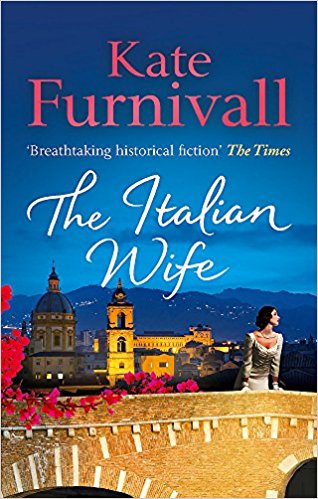
Whilst the group had heard of Mussolini none of us knew about his plans for creating a utopian city out of infested swamp land. Additionally, the historical facts provided at the end of the book were very enlightening and gave an insight into the political situation at the time of the setting of the book.
Unfortunately, for the majority of the group the book just didn’t live up to the hype and 5 star reviews. The book was ‘liked’ for many reasons – excellent descriptions, thrilling plot, compelling read, beautifully crafted romance, an insight into how the general public lived and what they had to do to survive under fascist rulers, the turbulence caused by the conflict between the fascists and the communists.
The only negatives were the credibility and likelihood of such a young, partially disabled woman being able to train, qualify and be employed as an architect when there was more than one reason to discriminate against her; and a gnawing feeling that given all of the above positives the book could and should have been so much better.
Other reading of readers' own choice..
The Great Alone - Kristin Hannah
Princess - A true story of life behind the veil in Saudi Aarabia - Jean
Sasson
Judas - Amos Oz
A Prayer for Owen Meany - John Irving
Fried Green Tomatoes at the Whistle Stop Café - Fannie Flagg
In the Days of Rain - Rebecca Stott
The Sealwoman's Gift - Sally Magnusson
Little Fires Everywhere - Celeste Ng
Burial Rites - Hannah Kent Book Club Reviews
The 37th meeting of the Book Club was held on 8th May 2018 at Denise's
The book for group discussion and review was:
PACHINKO by MIN JIN LEE
In recognition of Bron’s final book club meeting, here is her review:-
This saga is about a Korean Family and spans three generations.
It starts, before the first war at the beginning of the 20th century; in
a fishing village in Korea where a young girl marries an older man she
has never met before their wedding day. This could be a depressing start
to the book but there is much love shown by the characters throughout
the book for one another and the strength of their relationships. The
remarkable women in these families get them through really difficult
times in their lives.
The story is told with warmth and slow calm pace allowing the history of
the family to unfold. They are forced to move to Japan because of
changing circumstances, and there they survive terrible conditions of
food shortages and hardships during the Second World War but the reader
is allowed to see the strength and community that the family share
amongst the people close to them. You see the history of these times
played out through the characters in the book.
The Koreans form a separate community in Japan after the war but are
still treated as second class citizens by the Japanese even though they
provide a workforce which supports and aides the Japanese economy. You
are allowed to experience the life in this small compact community where
everyone helps each other and this is a heart-warming episode in the
book even though the family themselves are experiencing some awful
times.
Shame and guilt underpin many of the finest parts within the novel, with
the characters being forced by their position as second-class citizens
to make painful sacrifices and, consequently, to consider the nature of
those sacrifices.
The prejudice that is shown to the Korean people is illustrated by the
lives of Sonja’s boys. Her illegitimate son Noah demonstrates the
lengths the Korean’s will go seeking acceptance in their adopted
country. He pretends to be Japanese. Noah hides from his Korean family
and to all around him including his wife and children he is Japanese
until his adoring mother finds him.
Sonja’s grandson with his American University education years later
returns to Japan to work for a large Bank. Everyone including the reader
anticipates this High flyer to become a huge success as now the book is
set in the second half of the 20th century. Unfortunately he too is
unable to get away from his history.
Thank you Bron, for your resume and review.
The consensus of opinion at the meeting was that once again here was a
book that not many of us would have chosen if it had not been for Book
Club; and, once it again it proved to be a lovely discovery.
The book helped us understand more about the impact of the war on
Koreans and Japanese as the story moved from a peaceful fishing village
in Korea to modern Japan.
Additionally, here was another book that made us realise how little we
knew about another country and period in time. Certainly, not many of us
knew about the conflict between the Japanese and the Koreans and the
lack of acceptance of Korean people in Japan, nor how they were treated:
the extreme danger of being found out could result in losing family and
job.
The only negative was the unusual need of the author to keep inserting
Korean text, perhaps for verisimilitude but why when readers are
unlikely to have a clue what those words mean?
PERSONAL PREFERENCES AND REVIEWS
Personal preference choices and reviews from Book Club members included
the following: -
THE HOUSE OF SPLENDID ISOLATION by EDNA O’BRIEN
“This is the story of a few in their fight to free Ireland.
The book is well written with short, rich descriptive paragraphs.
The character studies are excellent. They lead to a plot that is
credible and progresses at a perfect pace.
Yet, you can indulge in laughter, as the apparent baffoons, the Guardie
gather.
This is a quality read. I commend the author for the richness, and not
for padding the novel out with rubbish.
Refreshing.”
ELEANOR OLIPHANT IS COMPLETELY FINE by GAIL HONEYMAN
“This is a feel good factor book, which is highly entertaining. It is
easy to read and once started I finished it quickly
The book starts with Eleanor who is a loner. She has no friends, is
disliked by her work colleagues. The only person she seems to be in
contact with regularly is her mother every Sunday by phone.
The book progresses and like all good onions, layers are peeled off one
by one revealing a little of her history and a changing Eleanor. From
one accidental encounter she develops a new life. The reader is taken on
this journey with her, which is at times amusing at others uncomfortable
but always entertaining.
She has hidden the past in the far recesses of her mind but bit-by-bit
it is revealed to Eleanor and the reader at the end of the book.”
“Would recommend to all”
THE WONDER by EMMA DONOGHUE
“Similar to her previous novel The Room, there are long spells in the
book when you wish the author might hurry up. But at the same time I
found I used these pages to try and valuate what was actually happening
between the lines.
Based on The Fasting Girls from 16th – 20th century Ireland, it follows
the story of Anna, who lives in a very poor part of Ireland just after
the Crimean War. Her family claim she has abandoned eating after being
called by God to do so. In this event, Lib a former Florence Nightingale
trained nurse and a Catholic nun are sent to monitor her 24/7 to see if
they can confirm that Anna is indeed bound for sainthood.
Lib is a confirmed atheist and approaches the situation with a clinical
logic, she sets to the task of uncovering whether the story is true or
if the girl has anorexia or perhaps suffers from a religious mania or
indeed is it a way that the family can make money, by charging visitors
from all over Ireland to see Anna.
Lib decides it is all ‘mumbo jumbo’ but then as she looks deeper into
things, all is not what it seems.
I enjoyed the book and would recommend it, maybe as a holiday read”.
HAG-SEED by MARGARET ATWOOD
“This novel is part of the Hogarth Shakespeare series of retellings of
Shakespeare plays.
This particular book retells The Tempest, and focuses on Felix, a
theatre director who is exiled to teaching in a prison after losing his
job with a Theatre company, and begins to plot his revenge against those
who wronged him.
Having studied The Tempest at school this book was a great way to
reconnect with the story and I really enjoyed Margaret Atwood’s
interpretation.
Other authors participating in the series include Howard Jacobson, Anne
Tyler, Jeanette Winterson, Tracy Chevalier, Jo Nesbø, Gillian Flynn and
Edward St Aubyn and I will definitely try other books in the series.”
The list of books for personal preference choices for the next meeting
is as follows:-
THE GREAT ALONE by KRISTIN HANNAH
PRINCESS by JEAN SASSON
JUDAS by AMOS OZ
A PRAYER FOR OWEN MEANY by JOHN IRVING
FRIED GREEN TOMATOES AT THE WHISTLE STOP CAFÉ by FANNIE FLAGG
IN THE DAYS OF RAIN by REBECCA STOTT
THE SEALWOMAN’S GIFT by SALLY MAGNUSSON
LITTLE FIRES EVERYWHERE by CELESTE NG
BURIAL RITES by HANNAH KENT
The 36th meeting of the Book Club was held 10th
January 2018
at Maura's
The book for group reading and review at our meeting was:-
A Little Life by Hanya Yanagihara
This was not a book for those who like their reading light and frothy
with a feel good, happy ending.
However, if you’re looking for a book that will have an impact, that
will make you look at an issue a bit differently and open your eyes to
the suffering of the victims of sex abuse then this may be for you.
WARNING – SPOILER ALERT
Even though the book is titled A Little Life – this book is anything but
little both in terms of content or subject matter. The central
character, Jude St Francis approaches 60 before his life ends, so
certainly not a short life and such a complex character, resulting from
an unimaginably horrific tortured childhood and adolescence, can hardly
be described as having a little life and so we agreed the title was a
misnomer.
Some found the book difficult to get into struggling to get over the
complicated and lengthy descriptions whilst others dove straight in,
head first, relishing every page – perhaps a reflection of those who
were reading on holiday whilst others who were snatching a few pages at
bedtime.
Some struggled with the harrowing storyline and depth of the intimate
details of child sexual abuse, self-harming, sexual, physical and
psychological privations whilst others took it in their stride.
However, balanced against this were amazing acts of love and humanity
including the heart-warming loyalty of Jude’s peers from college, even
though each in turn was also a complicated character but all amazingly
successful, each at the top of his chosen career; Willem the film star,
JB the artist and Malcolm the architect.
It was discussed whether or not the author had ‘over egged’ some of the
storyline. Was it fanciful that an eminent law professor might want to
adopt an outstanding orphaned student over the age of majority? Or that
a doctor, albeit a personal friend, would show such commitment and
loyalty to a patient? Or was the author trying to show us and emphasise
that victims of child sexual abuse are victims for life and can never
recover from the damage done to them? – even if they are incredibly
intelligent with a successful career, even if they find a couple who
loves them unconditionally and wants to adopt them as their own child
and even if they find their soul mate, the love of their life.
We even learn that despite how much Jude loved Willem it was never going
to be enough for Jude to be able to overcome his demons and express his
love physically with Willem.
The book poses the question do we make excuses for victims unable to
recover from their past? They may have ‘got over it’ if they’d had a
good family behind them or if they’d been more intelligent or if they’d
had the support of good friends or counselling or if they’d found
someone who loved them unconditionally. Or was the author trying to show
us that despite Jude having all of this it was never going to be enough
for him to overcome the damage done to him? Was there only ever going to
be one way in which he could find the ultimate release from his pain and
suffering in this world?
A look at the headlines in any newspaper attests to the prevalence of
child sexual abuse in today’s world and evidence of the hurt and long
term damage it causes:-
“Former Wales manager Gary Speed was one of four men coached by
disgraced paedophile coach Barry Bennell who went on to take their own
lives”
Gary Speed was a successful football player and manager. Having walked
alongside him after a football match I can vouch that he really was
tall, dark and incredibly handsome and yet, unexpectedly and shockingly
he took his own life at just 42 years of age. Did any of us know at the
time that he was a victim of abuse? Did his wife or family?
The scars of child abuse are not always easy to spot in the adult and
therefore we should tread carefully and respectfully with those we meet.
In the book Jude was uncomfortable when his adopted father approached
him and gently touched him and even his closest friends were unaware of
his past. It took Jude until the end of his life to be able to open up
about his past and the damage done to him.
Parallels were drawn between this book and those written by Charles
Dickens who used novels and literature to highlight the issues of the
day. He was a social critic who used his work to emphasise the plight of
the poor and living conditions, campaigning vigorously for children's
rights, education, and other social reforms.
Was the author of A Little Life deploying the same tactic?
Could we recommend this book? Well, it’s not for everyone but it has
opened our eyes to the prevalence of child sexual abuse in our world and
its lasting and long term consequences to the victims.
The 35th meeting of Book Club was held 13 September 17
The Book for group read and discussion at our
September meeting was Family Life by Akhill Sharma
The following review is provided by Bron -
“The book gives an insight into the Indian culture and how a family deal
with tragedy in their lives and how their response to this is affected
by their culture.
The book tells of how the family move to America seeking a new life
joining a growing community of Indian emigrants. They soon adapt and
take advantages of the new opportunities opening up for them. Tragedy
strikes whilst the family are on the ‘Crest of their wave’ when one of
the sons has a tragic accident which leaves him unable to care for
himself in any way. The mother who is a strong character decides to
nurse her son at home. This has unforeseen effects on the whole family
as they all come to terms with his illness and the impacts it has on
their lives. It portrays the survival of the family through many years
and many lows.
The father becomes an alcoholic trying to deal with his son’s illness
and his own disappointment at his family’s future. It portrays how this
behaviour causes the family more distress as their own community shuns
them. It describes how they desperately seek help from many sources some
medical others charlatans. They have a real struggle both emotionally
and financially trying to make their lives work. They are eventually
saved by the second son succeeding academically, which gives them
prestige in their community and financial security eventually.
I was not entertained by the book and felt it could have had a greater
impact on me if it had been condensed into a short story.”
There was split opinions about this book and therefore a great deal of
discussion.
The author had given us a brief book; had he deliberately given us the
framework of the story and leaving it to us, the reader, to put the
‘meat on the bones’. Would it have been unrealistic for a young boy to
have the thoughts and emotions of an adult? Had the author trusted us to
note that not all of Ajay’s behaviour was appropriate e.g. his displays
of affection when trying to get a girl-friend.
There was also much discussion about the final pages of the book and it
was interesting to hear the different interpretations of its meaning.
In conclusion, although it wasn’t an overall popular book it was a good
Book Club choice promoting a great deal of thought and discussion.
Crooked Heart by Lisa Evans
This book was the personal choice of 2 book club members. Both
thoroughly enjoyed it and wouldn’t hesitate to recommend. The following
is one of the reviews:-
“I found this an entertaining book, easy to read with a real feel good
character. I loved all the characters from Noel’s godmother Mattie to
Vee’s lazy son Donald.
It is an unusual story about an orphaned ten-year-old boy, Noel who
lives with his elderly godmother, Mattie. The story starts as Mattie
develops dementia, and how the care for their lives passes from Mattie
to Noel as she becomes unable to cope.
He is eventually evacuated to Cornwall at the start of the war where he
is taken in by a single mother, Vee but she is consumed by debt, and
sees Noel as a meal ticket for her and her odd family. The story unfolds
with Noel and Vee, who are as different as chalk and cheese, discovering
opportunities thrown up by the war to finance the family. The story is
told with a great deal of quiet humour and warmth. It is very uplifting
when the darker side of peoples characters, brought out by the war, are
thwarted by the two misfits.
A book I will keep on my bookshelf to read again on a rainy afternoon
when I need to see some ‘sun’.”
The 34th meeting of Book Club was held 24 May
17.
The book for group read and discussion at our May 2017 meeting was
Small Great Things by Jodi Picoult
The following is the review of Jean D, now retired from a very
successful career as a Midwife, cut her in half and like a piece of
Blackpool rock she has ‘caring for women and their babies’ written right
through her.
“Ruth Jefferson works at a Connecticut hospital with more than twenty
years' experience of caring for mothers and babies. During her shift,
Ruth begins a routine check-up on a new born, only to be told a few
minutes later that she's been reassigned to another patient. The parents
are white supremacists and don't want Ruth, an African American, to
touch their child. The hospital complies with their request, but the
next day, the baby goes into cardiac distress while Ruth is alone in the
nursery.
What a fabulous book. I was deeply involved from the first page. Once
again I supported my reading with Whispersync and was delighted to hear
a different reader read for each character. I loved the way Jodi Picoult
divided the book up into each character’s perspective and the narration
was brilliant.
I confess to being utterly shocked by the existence of white
supremacists and the support for the parents’ request in the hospital.
Ruth’s hesitation before performing CPR was quite understandable but
then to be charged with a serious crime seems totally wrong but there
was no surprise that the hospital were using her as a scapegoat rather
than accepting corporate responsibility.
The description of the midwives’ roles and responsibilities, sadly known
as a labour and delivery nurses in the USA as the Doctor is still
allegedly in charge of each case, was spot on and Jodi Picoult must have
done masses of research.
Kennedy McQuarrie, the white public defender who took Ruth’s case gave
unexpected advice insisting that mentioning race in the courtroom was
not a winning strategy. It was fascinating how as the trial moves
forward, Ruth and Kennedy gained each other's trust, and came to see
that what they've been taught their whole lives about others—and
themselves—might be wrong.
I loved the way after the book ends how Jodi Picoult (again her own
voice on the audio) explained why she felt compelled to write the book.
She wrote it with incredible empathy, intelligence and candour, tackling
race, privilege, prejudice, justice and compassion. The description of
the book as a “Modern day To Kill a Mocking Bird” was very accurate.”
In conclusion, this book was an excellent choice for a Book Club. It
provoked discussions on race, prejudice, diversity and equality both
inside and outside the work place. It was a very popular choice and one
to be recommended without reservation.
The following are a selection of the Book Reviews read as the personal
preference of members:-
Homegoing by Yaa Gyasi
“I chose this book from the proposed list as it seemed to keep the
discrimination theme going and would throw a light on the history. It
was a gruelling read and made you realise exactly where the thoughts of
the white extremists came from. The book describes the slave trade from
the 18th Century to the modern day in the US. Set in Ghana, then moving
to the USA, it gives graphic descriptions of the disgusting conditions
that the slaves waiting for transit had to endure whilst the English
officers lived a privileged life in the castle above. Each chapter tells
the story of a different character but each character follows the blood
line of two half-sisters who have very different experiences. The
novelist is Ghanaian- American so writes a very empathic portrayal of
the transatlantic slave trade. The stories of each character are
harrowing, right up to the last one at the beginning of the 21st century
when drugs over power his grim life.
Not a pleasant, relaxing read and not as gripping by any means at Small
Great Things but a lot was learned.”
Exposure by Helen Dunmore
This book is set in London in the 1960s at the height of the Cold War.
When a highly sensitive file goes missing, Simon Callington is accused
of passing information to the Soviets and arrested. However, his wife
Lily is convinced of his innocence and suspects that ‘others’ may have
their own motives and reasons for Simon to be prosecuted. But, Simon
knows that if the full truth about his past was revealed he could find
himself imprisoned for a completely different crime.
This was a good book, with the author maintaining the tension and threat
of exposure throughout. The characters were well drawn and credible.
It was sad to note that the author, Helen Dunmore died in June at only
64 years of age.
The Underground Railroad by Colson Whitehead
“I can see why this book won the Pulitzer Prize for Literature bringing
much acclaim from the Literary Elite in America. It tells the graphic
and sordid tale of a young teenage slave girl who runs away from the
cotton plantation where she was born in Georgia to try to find freedom
and safety in the more liberal North.
It is a disturbing story portraying the lives of both the black slaves
and also the liberal white Americans who tried to help them. It tells of
cruelty and murder, with little respect for the sensitivities of the
reader. It is not an easy book to read and I cannot say I enjoyed it,
although I did learn more about the era in which it was set. The story
keeps you engaged through the belief that Cora the young slave girl
would escape this awful attrition and will find the freedom she desires.
In the book she moves through several states a fugitive of the ‘Slave
Catcher’. However, many seemingly safe havens often hide a darker more
sinister undercurrent waiting to envelope the unsuspecting slave.
I guess it educated me, opening my eyes to the horrors of slavery in
America before the Civil War. I will not be able to watch Gone with the
Wind again without seeing it as a fairy tale of the way the South
behaved towards slaves.”
The Binding Chair by Kathryn Nicolson
This is the story of a young orphan’s adventures after she flees rural
China for turn of the century Shanghai.
Unfortunately, the book did not appear to live up to the expectations of
the 2 members who read it.
One commented that it was a compelling read about a former Chinese
prostitute with bound feet who marries an Australian in Shanghai. It was
a window on Chinese culture but with some complex, unpleasant
characters, mostly women. However, she did not find it a well written
book, it flitted from past to present and at times was hard to follow.
In conclusion, it was a bit disappointing.
The second reader thought it would be about Chinese life and the
practice of foot binding but she did not like the way the author had
written the story – it was interesting but rather far-fetched.
The Binding Chair does not appear to stand up to the standards of White
Swans by Jung Chang
Even though the following book was not on the short list of books for
either group or personal reading a member of Book Club wanted to submit
her review :-
A Diary of The Lady, my first year as Editor by Rachel Johnson
“This was a quirky read. It took me a hundred pages of tutting to relax
into it.
Life seemed flighty, unreal, a trifle bitchy. What a balancing act of home, dog, endless press-launches, connections, speeches and
invitations. Who gets half a million to carry on this caper? How do you
accidentally become involved with a forestry campaign?
Once relaxed into the formula I could laugh, and laugh I did.
The daily in tray was filled with delights. The people-watching was
endless.
The plot by Julia Budworth to hoist Rachel out of The Lady weaves
entertainingly throughout.
It is well written and bonkers.
A good read in between Gin and Tonics”
It was interesting to note that Rachel Johnson is the sister of Boris
Johnson but after that review I’m prepared to risk 99p if it pops up as
a Kindle Daily deal.
The 33rd meeting of Book Club was
held in January 2017.
For our January meeting we read and reviewed The
Glorious Heresies, a prize winning debut novel by Lisa McInerney.
One murder connects the lives of five characters who exist on the
fringes of society in Cork, Ireland.
There’s 15 years old Ryan and his alcoholic father, Tony; Jimmy Phelan,
a local gangster and his mother Maureen; and, Georgie a prostitute who
will not give up on discovering the whereabouts of her missing
boyfriend, Robbie.
Considering this wasn’t an overwhelmingly popular book it certainly did
provoke a lot of discussion.
It was an opportunity to dwell on not only the misfortunes of the
characters’ circumstances but also our own good fortunes.
We’ve often praised Book Club for making us read books that we wouldn’t
have otherwise chosen and this book certainly fitted into that category,
but as it took a few out of their comfort zone not many thanked Book
Club for the privilege on this occasion.
Although it would be lovely to think of a world where there was no
murder, poverty, violence and drugs. Unfortunately, the sad reality is
that these issues do exist and for some exist on a daily basis.
Ryan showed talent and potential as a musician, if only….
Ryan’s girlfriend, Karine had a nursing career ahead of her, if only….
Was there any escape for any of them ?
Having said that the book was gritty and coarse both in subject matter
and language there was also some darkly comedic moments. Worthy of
mention was Maureen Phelan, a pitiful, but spunky character and not your
typical murderer.
But had society let these characters down when they needed help and
support most. What help was offered to Maureen Phelan when she found
herself to be pregnant and unmarried? What help was offered to Ryan when
he turned up at school with marks and bruises on his face, a victim of
domestic violence? What help was offered to Tony and his six children
when his wife died? What help was offered to Georgie who’s only option
was to turn to prostitution.
Maybe, this book wasn’t just about the characters and the tangled web
they found themselves in but also about what role society had or had not
played in supporting and helping them. Maybe the book turns a mirror on
us and asks us not to be too judgemental about those who live on the
fringes even those who would appear to be the most despicable.
One Book Club member commented that even though she hadn’t enjoyed
reading the book she had spent a lot of time since reflecting on the
book and could actually recall the contents long after she had read it.
In conclusion, not a popular book but a great thought and discussion
provoking read for Book Club.
The 32nd meeting of Book Club was held in October 2016.
At our October meeting we discussed A House Full
of Daughters by Juliet Nicholson. This book plotted the history
about the Sackville-West family, including Vita who was as notorious for
her affair with Virginia Woolf as for her celebrated garden at
Sissinghurst. The book was written by Vita’s granddaughter, Juliet. An
informative book which used the diaries of the family and so whilst it
was historically accurate it wasn’t always an entertaining read. Did we
see the real characters or just Juliet’s perception of them? The book
showed how the upbringing of the female members of the family impacted
upon their own lives and those of their children especially their
daughters. The daughters in their turn took their dysfunctional family
life into their own families creating a dynasty of people who were
unhappy at some level. Despite this there seemed to be good
relationships between fathers and daughters: Victoria and Old Lionel,
Vita and Young Lionel and Juliet and her father Nigel. The famous garden
at Sissinghurst played a role in the book by binding the family together
in the peace it brings to its occupants.
However, this was a popular book and again one that not many would have
chosen for themselves.
A few members read A Seaside Affair by Fern Britton and whilst
most found it a light holiday read that was predictable with ‘nice’
characters, it wasn’t inspiring and no doubt the popularity of its
author earned its place on the best sellers list. However, one member (JD)
took great exception to this ‘badly written, sentimental tosh’ which
again brings us back to contemplating on how we have developed as
readers over the last 10 years.
Before the end of the meeting we discussed the Manchester Literature
Festival which ran from 7th– 23rd October 2016 however it appeared
that we were too late to book for many of the events. It was agreed that
we would register with the Festival and be prepared to book early for
next year’s events.
**********************
The 10th Anniversary meeting was held at the Whittaker in June 2016 read more of this special event here
**********************
The 30th meeting of Book Club was held in January 2016.
We had selected 3 books for review at our January
2016 meeting :- The Bees by Laline Paull, We Are Water by
Wally Lamb and Engelby by Sebastian Faulks. In hindsight,
perhaps we had overstretched ourselves as not many of our members
managed to read all 3 books. However, enough had managed to read each
book in order to provide a discussion for review.
The Bees by Laline Paull.
Firstly, it has to be said that this was one of the most attractive book
covers we have seen.
The story followed a young sanitation bee called Flora 717, born into
the lowest caste of the hive she shouldn't have had the power of speech
but did and soon demonstrated that she was even more unusual than was
originally thought, able to do things that nobody ever expected a lowly
sanitation worker would be capable of doing. She was able to create
‘flow’ - a liquid to feed the royal offspring. This lead to a short
reassignment to the Nursery, and soon after Flora became a forager bee
searching for and bringing back pollen for the hive. The
anthropomorphised bee led a charmed life and escaped some of the traumas
suffered by other bees.
Not many were able to stick with the book until the end but our guest
reviewer Jean D loved it, despite the fact it was probably one of the
most unusual she had ever read with the smallest characters that she had
ever come across in a novel, and she was fascinated by it from the
beginning to end. It was far more exciting than she would have imagined
from what little she knew about bees. All the roles in the hive were
defined from the queen to the drones (pompous 'malenesses'), the nurses,
the 'fertility police' and the cleaners. As the book reached its
conclusion the discipline in the hive breaks down and Flora emerged as a
heroine. Despite being a heroine Flora 717 did make mistakes, committed
crimes against society, and made highly questionable decisions.
Many agreed that it wasn’t a quick read as it wasn’t a compelling
storyline, just a lovely book to pick up when you had time to read and
easy to recall the storyline. The story was amazingly imaginative and
conjured up the life of bees in brilliant detail creating a convincing
portrayal of the ‘mindset’ of bees and their hive. It was not all
sweetness and light, by any means, with descriptions of insects being
eaten alive, ripped apart limb from limb.
As a Book Club we don’t often stray away from the main stream and
certainly this was one of our rare forays out of our comfort zone and
into ‘fantasy’. In conclusion, this book was added to our ‘Life of Pi’
category with members either loving or hating it and certainly no
ambivalence towards it.
Engleby by Sebastian Faulks
Again, this book wasn’t read by all Book Club members but our guest
reviewer (JD) commented that she loved the author but not this book.
Engleby tells the tale of a working-class boy who wins a place at an
esteemed university and it becomes a murder mystery following the
disappearance of a girl at a nearby college. The majority of the book is
written from Engleby’s perspective and flits from past to present. The
personality disorder of Engleby becomes more and more evident only
enhancing the unpleasantness of the character.
Jean felt that generally it was a miserable book and felt compelled to
finish it for Book Club rather than actually wanting to finish it. She
was disappointed because one of her favourite books of all time is Bird
Song by Sebastian Faulks and she also enjoyed Charlotte Grey and The
Girl at the Lion d’Or but she found it hard to believe that Engleby was
written by the same author.
On the other hand and to prove the adage of ‘One Man’s Meat is another
Man’s Poison’ the BCF loved this book having it on her Top 10 list of
favourite books. She felt that being written from Engelby’s perspective
for the majority of the book left the reader to use their imagination as
to what Engelby was truly like, especially once it became obvious that
he was no ordinary man. The reader’s suspicions being confirmed in the
final phase of the book where Engelby’s friends provide their
description of him and their version of events as earlier described by
Engleby.
We Are Water by Wally Lamb
Just 2 of our members managed to read We Ae Water and despite commenting
that they didn’t enjoy the storyline they certainly had a detailed
discussion about what they disliked. The discussion was lively enough to
whet the appetite of BCF and to regret not having read the book - it has
now been moved up her ‘To Be Read’ pile of books.
************************
The 29th meeting of Book Club was hosted by Jean at No 17 on 28 September 2015. The books for review and discussion were :-
I am Pilgrim - Terry Hayes
The Children Act - Ian McEwan
The first book for review was :-
I am Pilgrim - Terry Hayes
This book tells the story of ‘Pilgrim’ a former leader of a deep-cover
US Agency and his attempts to lead a normal life outside of the ‘secret
world’. However, he is dragged back into business after being asked by
his Police Detective friend to offer advice on a potentially ‘perfect’
murder scene. The book then follows Pilgrim around the world as he
attempts to thwart the plot by an Islamic fundamentalist to create and
release on the US a potentially apocalyptic smallpox virus.
It didn’t come as a surprise to hear that the author is a former
Hollywood scriptwriter, as many commented that they felt the book had
been written with a film in mind. The plus side comments included ‘page
turner’, ‘thrilling’ and ‘impressive debut novel’ The negative comments
included ‘gruesome’, ‘too coincidental’ and ‘far-fetched’. Despite the
comments it appeared that all had read the book to its conclusion.
Discussion also took place on the popularity of certain authors who do
not always receive the recognition of their peers e.g. Dan Brown, Lee
Child. There is no doubt that certain authors can capture the public
imagination, with their latest works flying to the top of the best
sellers lists and perhaps they should not be too heavily criticized for
their writing style because surely it can only be good for people to
read. There should be room for all styles. This led to discussion on
what motivates an author? to be a ‘crowd pleaser’?, to write a piece of
literature that will stand the test of time and be studied by future
generations? or is it a cathartic exercise.
In contrast to the weighty 800+ pages of ‘Pilgrim’, the second book for
review was a quarter of the size however, some felt that it was evidence
of the opinion that in some cases “less is more”.
The second book for review was :-
The Children Act by Ian McEwan
This book is the story of Fiona, a leading High Court judge who
specializes in Family law.
However, her heavy workload leaves her little time to deal with the
breakdown of her apparently happy marriage.
Fiona is presented with the urgent case of a boy, just short of 18 years
old who is suffering from leukaemia but on religious grounds his parents
refuse to agree to the blood transfusion that will save his life.
The book provides a detailed analysis of the dilemma from all angles not
just Fiona’s.
On this occasion the group was split into those who ‘worship at the
altar of Ian McEwan’ and those who don’t.
The ‘McEwanites’ in their rose tinted glasses read a brilliantly
written, thought provoking book where no word was wasted. The characters
were well described and realistic.
However, others didn’t agree but as a ‘McEwanite’ I am exercising my
right as the author of this review not to include their comments in any
great detail : )
**************
The 28th meeting of Book Club was
hosted by Bob and Denise on Wednesday 6 May. The books for review and
discussion were :-
We Are All Completely Beside Ourselves - Karen Joy Fowler
Elizabeth is Missing - Emma Healey
This was the first time that a member was able to join us through the power and magic of the interweb. It was lovely to have Kathryn with us, even though she was physically overseas.
The first book for review was :-
We Are All Completely Beside Ourselves by Karen Joy Fowler.
This is the story of Rosemary and her family. She used to have a sister
of the same age and an older brother but both are now gone from her
life, leaving her an only child.
The story begins in the middle with Rosemary at College and flits
between Rosemary’s past and the present day.
This review will be written without highlighting the spoiler in the
storyline.
The book received mainly negative reviews from the Book Club and I
certainly can’t recall anyone saying that they could recommend it to
others (but it must be said that after the initial glasses of Prosecco &
Sloe I can’t recall much of what anyone said anyway– thank goodness I
get handwritten notes from our Book Club members).
Some found it hard to get into the book and persevered for the sake of
Book Club but having persevered they didn’t like the author’s writing
style and found some of Rosemary’s crystal clear recollections of events
before her 5th birthday almost too good to be believable. There was
discussion on whether or not this was guilt tinged flash backs rather
than authentic memories.
On the other hand, some liked the writing style but felt that the
narrative lost pace in the middle of the book.
The characters were unpopular, especially Rosemary’s friend, Harlow with
her crazy and disrespectful behaviour.
Some were left feeling sad and uncomfortable about the storyline.
One review of the book said that it was ‘achingly funny’ however many of
our members found it difficult to find the humour and wondered if they
were reading the same book. There was some surprise that this book was
included on the Booker Shortlist and we could only think that it was a
reflection of the unusual and radical storyline.
Elizabeth is Missing by Emma Healey
This was the more popular choice of the 2 books however it really didn’t
have that much competition.
It is the story of Maud who is forgetful, sometimes her home or her
daughter or unrecognizable to her. But the one thing that Maud does know
is that her friend Elizabeth is missing and that she knows the answer to
an unsolved 70 year old mystery, a mystery that everyone has forgotten
about, except Maud, that is.
As a number of our members are of a ’certain age’ they felt a bit
disconcerted by the descriptions of someone suffering from dementia.
Recognizing their ‘senior moments’ at times in the book.
Some of our members have experience of caring for dementia patients and
this book certainly hit a nerve. However, it was interesting to read the
story from Maud’s perspective, giving an insight into how a sufferer
must feel and perceive the world around them. It did highlight the need
to provide a sufferer with routine and to limit change to as little as
possible.
The book provoked a good discussion on the issues surrounding dementia
both from the sufferers’ and the carers’ perspectives.
Members enjoyed the parallel storylines of Maud and her missing friend
Elizabeth in the present and Maud and her missing sister Sukey from the
past.
In conclusion, this was a very accomplished debut novel from this author
and a popular choice to be recommended.
**************
The 27th meeting of Book Club was
hosted by Bron on 28 January 2015. The books for review and
discussion were :-
The Bronze Horseman - Paullina Simon
The Thirteenth Tale - Diane Setterfield
This was the first time in our 9 year history
that a meeting Book Club was nearly abandoned due to the bad weather.
However, we continued to review and chat (and drink) even in the face of
the falling heavy snow.
The first book for review was :-
The Bronze Horseman - Paullina Simons
This novel is set in Leningrad in 1941 and is the story of 2 sisters,
Tatiana and Dasha who live in a one bedroom flat with their parents and
brother. The routine of their hard impoverished life is shattered on 22
June 1941 when Hitler invades Russia. In addition, on that day Tatiana
meets a young Officer named Alexander however, Tatiana is not the only
one who has fallen for the young Officer.
The book tells the story of this love triangle set amongst Hitler’s
strategy of starving Leningrad into submission.
Yet again, this was another book that evidenced the benefits of being in
a Book Club: a number of us commented that we would not have chosen this
book for ourselves, especially at over 800 pages long (I know you
shouldn’t judge a book by its cover or its number of pages but
unfortunately it does seem to affect decision making, unless you’re
planning a long haul flight or being marooned on a desert island). Those
of us who are still dealing in ‘touchy feely’ books now have biceps to
be proud of.
However, having recovered from the size of the book the majority view
was that this story gripped the reader from the first page. Yet again,
we felt that we had been paid a history lesson feeling slightly ashamed
that we were unaware of the dreadful impact the advance of the German
war machine had on everyone in Russia, especially those living in
Leningrad. During WW2 we had austerity in the UK but no one starved to
death or died on the streets because of malnutrition.
Comments were made by the ‘realists’ that they struggled at times to
believe how easy it was for Alexander to be able to visit Dasha and
Tatiana so regularly and then for them to find each other so readily in
the war zones. The author had used a certain amount of ‘poetic license’
and certainly there wouldn't have been a story without these
opportunities.
The descriptions of the communal living conditions were also a
revelation. It was hard to imagine anyone having to live everyday in
these conditions, never mind anyone choosing to live this way,
especially the American emigrants who wanted to do it in order to pursue
their dreams of Communist ideology. However, given recent reports of
families travelling from Britain to Syria in order to support ISIS maybe
we shouldn’t be too surprised. It was a valuable lesson in Russia’s
traditions and politics and its influence on the life of its population.
In conclusion, this was a popular choice - the book was written
beautifully and descriptively and produced a compelling read.
Apparently, some members have bought the next book in the series,
perhaps they can update us on the love story at the next meeting?.
The second book for review was :-
The Thirteenth Tale - Diane Setterfield
It was felt that this book was less gripping than the Bronze Horseman
but was an easy read. The ‘realists’ again struggled with some of the
story line – how could so much be related by Vida Winter when she could
not possibly have been present at all the incidents described ? Was she
using her author’s abilities to elaborate and embellish the story?. If
there was a dead body in the outhouse right up to the moment of the fire
then surely there would have been a smell? One that was as bad, if not
worse than the one left in Charlie’s room.
Some commented that the spooky bits weren’t that spooky and didn’t hold
them rigid with fear and needing to turn the next page. Margaret’s own
life was strange and somewhat impossible and not developed fully. This
was unsatisfactory for those who like answers before the end of the
book.
All in all, it was an easy book to read without making a huge impression
or being a life changer.
**********
The 26th meeting of Book Club was hosted by
Yvonne on 1st October 2014 and held at Jean Duerden’s. The books for review and
discussion were :-
The Light Between Oceans by M.L. Stedman
Reading Lolita in Tehran: A by Azar Nafisi
Reviews
Ooooo what a dilemma.
After serving for 4 years on the Western Front, Tom returns to Australia and gets himself a job as a lighthouse keeper on Janus Rock, an isolated island half a day’s journey from the coast. However, where others would see isolation Tom finds peace and tranquillity. After years of chaos and disorder Tom finds comfort in the routine and regime of his role.
During one of his rare visits to the mainland and after a whirlwind romance Tom marries the young, bold and loving Isabel. She joins him in his life on Janus Rock.
There is only one piece needed to complete this idyll. However, after 2 miscarriages and 1 stillbirth it seems that this will be a constantly missing piece from their jigsaw.
That is until one night when a boat is washed up on the island containing the body of a dead man in addition to a live baby girl.
Against his better judgement Tom does not record the events of that night. Tom and Isabel bury the dead man and raise the baby as their own.
However, on the mainland a woman is struggling to accept the loss of her husband and baby daughter after he sailed into the night with their precious baby. The woman never gives up hope that they may be alive and well somewhere in the world.
Isabel convinces herself that the baby is a “gift from God” and ignores the reality of where the baby came from and how she ended up on Janus Rock. However, Tom’s conscious is not quite so clear.
Two years later as Tom and his family make one of their infrequent visits to the mainland the reality of the child’s origins hits home.
Book Club members were unanimous in their appreciation of this novel, some to a greater and some to a lesser degree.
For a first book from the author it was a major achievement in producing such a thought provoking situation. The skill was in making the reader see and assess the dilemma from all angles and all view points and certainly it was difficult to predict a solution that was acceptable to all. Especially, as unlike the Judgement of Solomon neither of the ‘mothers’ was prepared to relinquish the girl to the other in order to ease the girl’s pain. The author did a good job in making the reader feel sympathetic and understanding even when the characters were in the wrong or had made poor decisions.
It was noted that this was yet another book club book being made into a film with Michael Fassbender, Rachel Weisz and Alicia Vikander.
Reading Lolita in Tehran: A Memoir in Books by Azar Nafisi
The book is a memoir of the experience of the author who returned to Iran during the revolution (1978-1981) and lived and taught in the Islamic Republic of Iran until her departure in 1997. It narrates her teaching at the University of Tehran after 1979, her refusal to submit to the rule to wear the veil and her subsequent expulsion from the university, life during the Iran-Iraq war, her return to teaching at the University of Allameh Tabatabei (1981), her resignation (1987), the formation of her book club (1995–97), and her decision to emigrate. Events are interlaced with the stories of book club members consisting of seven of her female students, who met weekly at Nafisi's house to discuss works of Western literature, including the controversial 'Lolita'; and the texts are interpreted through the books they read.
In her memoir, Professor Nafisi recounts the situation when during one of her classes she put the book, The Great Gatsby by F Scott Fitzgerald on trial, with students presenting both a prosecution and a defence of the book. In the same vein I will present the defence for Reading Lolita in Tehran.
Agreed, this was not an easy book to read and certainly not one to be read just before ‘lights out’. I took the book to work and read it during my lunch hour when I was slightly more alert.
I adopted a different approach to the book and once I had changed my mindset to accepting that this was more of an academic exercise rather than entertainment then I found it easier to get to grips with.
I accept that most Book Club members read for pleasure rather than to be educated and I can honestly say that if it had not been for Book Club I am uncertain whether or not I would have started or finished the book. However, having started it I felt obliged and was intrigued enough to persevere to the end. I suppose it was the number of times that I kept thinking ‘I didn’t know that’ that kept me going.
Given the present situation in Syria, the rise of Islamic State and the recent news that a British-Iranian woman who has been imprisoned in Tehran for attending a men's volleyball match has gone on hunger strike, I think that a lot of the events recorded in the memoir still has a relevance to us in today’s world.
Part of the title says ‘A Memoir in Books’ and as the definition of ‘memoir’ is ‘a historical account written from personal knowledge’ I think that is exactly what Professor Nafisi has given us. I feel that one of the purposes of the book was to highlight and describe life both as an academic and as a woman trying to live and work in Iran after the revolution. I am not sure that Azar Nafisi felt the need for her book to be entertaining as well.
I was fascinated to read the history behind the wearing of the veil. How it was once viewed as a religious symbol which was abolished by the Shah in an attempt to make Iran a more secular country and how it was reinstated after the revolution but this time it was seen more as a political gesture and a symbol of power of men over women rather than as a covenant with God.
As someone who abandoned English Literature at ‘O’ level stage I was intrigued by Professor Nafisi’s thoughts on the authors, Nabokov (Lolita), Fitzgerald (The Great Gatsby), James (Daisy Miller and The Ambassadors) and Austen (Pride and Prejudice). I found it to be an insight into the world of Literary Criticism without having to enrol on a College course. I will confess and with much shame I admit that prior to reading this book I had not realised that Lolita had attained a classic status and was such a well renowned example of 20th Century Literature.
In conclusion, and to paraphrase the famous quote ‘Those who can, do, those who can’t teach’, perhaps in Professor Nafisi’s situation it is a case of ‘Those who can, write, those who can’t criticise and write a memoir’.
But as a member commented, the book club established by Professor Nafisi sounds much more boring and hard work than ours!
--------------------
The Silver (25th) meeting of Book Club was
held on 7th May 2014 at Maura’s. The books for review and
discussion were :-
The Rosie Project by Graeme Simsion
The Good Thief’s Guide to Venice by Chris Ewan
Reviews
THE ROSIE PROJECT by Graeme Simsion
Don is a university lecturer in genetics at Melbourne, Australia. He is
single, on the brink of his fortieth birthday and leads a highly
systemized life dominated by routines, list, structures and timetables.
He has a small group of friends, namely Gene and his wife Claudia. Gene
is also a lecturer and Claudia is a psychologist and Don’s unofficial
therapist.
The story begins with Don substituting for Gene to deliver a lecture on
Aspergers. At this point it is clear to the reader, though not to Don,
that he has much in common with the subjects of his lecture.
Don becomes aware that statistically married men are happier and live
longer and therefore it is the logical decision to find a wife. To this
end he devises a questionnaire covering all the criteria that Don
perceives would make his perfect wife.
Meanwhile, Gene arranges for Don to meet up with Rosie, one of his PhD
students. Rosie is completely unsuitable and does not match Don’s
criteria for a perfect wife.
However, Rosie has her own issues, specifically regarding the identity
of her father and as an expert in genetics, Don decides that in addition
to finding himself a wife he will help Rosie identify her true father
through the use of DNA sampling and testing.
The book is narrated in the first person through Don’s ‘Aspergersesque’
point of view.
What was light reading actually proved to be a source of a lengthy
discussion regarding the fairly modern concept of Asperger’s syndrome,
the spectrum of symptoms and the practice of labelling people with
Asperger’s; and, whether it should be viewed as a ‘difference’ rather
than a disability.
The majority of the group really liked the book especially for those who
had personal knowledge of people with symptoms (K- I don’t remember Don
wiping his finger along surfaces and checking for dust, but I may be
wrong). It’s a fine line between having the reader laugh at the
situations that Don finds himself in rather than laughing at Don’s
‘differences’.
The consensus view was that it was a light, humorous, enjoyable read,
poignant at times and a candidate for the Good Summer Holiday Read
category. As a result of the lengthy discussion at this meeting perhaps
it should also be a candidate for Good Book Club Book.
THE GOOD THIEF’S GUIDE TO VENICE by Chris Ewan
Charlie Howard, an ex-burglar turned crime writer is staying in Venice
while completing his latest book. He soon becomes embroiled with a
glamorous female cat burglar whom he finds breaking into his flat. The
subsequent plot involves the theft of a signed copy of The Maltese
Falcon, blowing up the house of a local grandee, a kidnapping and
gambling cartels. Charlie’s companion through the book is Victoria, his
literary agent who is staying with him.
The majority view was that this book was badly written, incredible and
disappointing. The writing style was naive and irritating and did not
tempt many to read further books from the author’s ‘The Good Thief’s
Guide to......’ series.
The book provoked little or no discussion and only a small minority of
the group preferred this book to The Rosie Project.
--------------------------------------------
The 24th meeting of the Book Club was held at 8.30 pm on Wednesday, 15th January 2014 at Mary Clare's home, number 8. The books for review and discussion were:-
The Cuckoo Calling by Robert Galbraith (aka JK Rowling)
Tiny Sunbirds Far Away by Christie Watson
And the Mountains Echoed by Khaled Hosseini
Reviews:
The Cuckoo Calling - Robert Galbraith (aka J K Rowling)
For reasons that I cannot fully explain or put my finger on I could not
be inspired to start this book. I know that others felt the same but
showed more grit and determination than me. Jean noted that despite
reading this reluctantly she found herself keen to know how the story
would progress and found Strike utterly fascinating. She could imagine
the office he was living and working in and she loved how the case
developed and was eventually solved, most unexpectedly. The character
descriptions were excellent, all credible, as was the story line.
As a ‘Hogwarts virgin’, Jean commented that if this was an example of J
K Rowling then maybe she should try Harry Potter. She felt that it was a
thoroughly good read and one to be recommended.
It would appear that this was further evidence to the power of Book
Clubs especially for those of us who had neither read any of the Harry
Potter books or are not fans of the Whodunit / ‘Detective’ genre.
Tiny Sunbirds Far Away - Christie Watson
Jean felt that on first impression this was going to be an interesting
book and fairly light reading but before long it turned in to a
harrowing tale that did not compel her to read it and at times she had
to force herself to get on with it. She found it frustratingly
longwinded in places and some of the characters unnecessarily grotesque.
It was very descriptive but some of the descriptions she could have
happily done without, especially the school toilet facilities but
commented that perhaps we need pulling out of our middle class security
and need reminding of what life is like for others. Jean struggled with
this book until suddenly she was interested as the midwifery aspect of
the book started. However, she found it hard to grasp that a 12 year old
could be taking on the responsibilities of a midwife but then this was
Nigeria not the UK!
Jean felt that the book was somewhat disjointed with so many political
issues being raised in one book and she couldn’t help but feel that
Christie Watson was trying to put over too many in one story. There was
rural midwifery, female genital mutation, lack of law and order,
unemployment, lack of basic facilities - power and water, poor
sanitation, environmental damage caused by the oil companies, gang
warfare, bribery and corruption, political dishonesty, marital
breakdown, adultery, bigamy, to name just a few. To Jean it felt a bit
like Angela’s Ashes set in Nigeria!
In conclusion, Jean felt that it was not the happiest book she had read
and she would be slow to recommend it as a good read.
However, this was the one book that I read and I really enjoyed it and
yes, whilst I agree that it did feel as though a lot of issues were
being shoe horned into the narrative for me it was an eye opener into
the lives of others without necessarily being a heavy weight tome. It
certainly touched me enough to have me crying at one point.
Perhaps this book is another contender for The Life of Pi category.
And the Mountains Echoed - Khalid Hussain
Initially, this was Jean’s least preferred book of the 3 and as such she
only started it four days before book club. However, she ended up using
every available, and unavailable, opportunity to read it and actually
concluded this was the best of the three books chosen for review.
Her initial reluctance to read the book was because she did not want to
read yet another harrowing tale of cruelty and poverty. As she skimmed
through the first chapter she thought 'Here we go again' - but then she
was gripped! She loved the way that different characters all linked
together and eventually the full story was told.
The book also takes us on an interesting journey to different parts of
the world, not centering on Afghanistan for the entire book. Jean also
liked the way that the book spanned from the 1950s to the present day,
bringing us right up to date with the current situation in Afghanistan.
Book Club had previously reviewed The Kite Runner and A Thousand
Splendid Suns at an earlier meeting and so we already knew that Khalid
Hussain is a great story teller. Jean felt that once again he has
produced an excellent and gripping book with some interesting
characters.
In Jean’s opinion a thoroughly good read, one that she would happily
recommend to others.
------------------------------
Points of interest for LCA Book Club members from New Books magazine :-
The New Books magazine Book of the Year 2013 was The Poisonwood Bible by Barbara Kingsolver.
The Secret Life of Bees by Sue Monk Kidd is a book that was passed around members of the LCA Book Club without it ever actually being a book for review.
Sue Monk Kidd’s latest novel The Invention of Wings will be published in hardback on 7 January 2014 ; and, for those who enjoyed The Slap by Christos Tsiolkas, his latest novel Barracuda will be published in paperback on 2nd January 2014.
New Books magazine are giving away copies of the above books for £3 to cover p&p. If anyone would like a copy please contact Denise and she will order a copy through her subscription to New Books magazine.
For those of you interested in saving the earth, you might want to log on to the Green Metropolis web site: www.greenmetropolis.com Here you can buy books for £3.75 and sell them back for £3. Both of the recommend books for the next meeting are available.
We were recently asked by New Books Magazine for our nominations for 'The One.......' section. Below is the summary of our responses written up by our wonderful Book Club Facilitator (BCF). Denise Collins.
The one... that made us talk Room by Emma Donaghue ; and,
The Credit Crunch Conspiracy by ‘Dominic Varadi’. This book was chosen as a recommendation from an Amazon review on another book. It was only afterwards did we realise that this was a self published book. The author had very kindly offered to attend our meeting to listen in on our discussions. However, we politely declined his offer.
The one..... we learned most from This was a close tie between The 19th Wife by David Ebershoff, providing the historical background to Mormons and Polygamy ; and, A Thousand Splendid Suns by Khaled Hosseini – a real eye opener into the history of Afghanistan, Afghan women and the attitude of the Taliban
The one .... we struggled with The End of Mr Y by Scarlett Thomas. Although this was one of the most visually appealing books it was also the one that the majority of us couldn’t finish, only one member of the club was dogged and determined enough to read through to the end.
Some members felt that The Black Dahlia by James Ellroy gave ‘Mr Y’ a close run for its money. However, based on numbers failing to finish the book then Mr Y pipped the ‘Dahlia’ at the post.
The one.... that surprised us Mist over Pendle by Robert Neill. This book was chosen for its local interest as we live quite close to Pendle Hill; and, also in recognition of the fact that it had recently been the 400th anniversary of the Pendle Witch Trials. This book was an unexpected pleasure. Many had been put off reading the book fearing that it would be a description of the persecution of innocent women wrongly accused of witchcraft, akin to the Salem Witch Trials.
However, this is the story of the Pendle Witch trials told through the eyes of Marjery, who was sent to live with her Uncle Roger in Pendle. Many found the description of the countryside fascinating and provided an historical background to our locality. The book also provided an insight into life in those times for both the wealthy and those who were penniless, along with the religious constraints they lived under.
The one .... that divided us The Life of Pi by Yann Martel. This one split the Book Club into 3 :- the ones who loved it, the ones who enjoyed it and the ones who hated it. The division between the ‘haters’ and the ‘lovers’ was so wide and deep that it gave rise to a whole new phrase in subsequent meetings ‘A Life of Pi Situation’
The one(s) ... we’re reading next Before I Go to Sleep by S J Watson
Gone Girl by Gillian Flynn ; and,
The Kitchen House by Kathleen Grissom
The one.... we couldn’t make our minds up about
The Slap by Christos Tsiolkas. This book was also nearly an entry in ‘the one that made us talk’ and ‘the one that divided us’ categories. This book definitely provoked discussion.
The one.... we wish we’d read The Secret of Bees by Sue Monk Kidd. This book was passed around Book Club members ‘under the table’ without it ever being chosen as one for discussion. However, I suspect that there would have been little discussion as it’s been a unanimous thumbs up for this book so far.
BOOK REVIEWS
Book reviews from previous meetings:
The 23rd meeting of Book Club was held on 4th September 2013 at Jean S’s home.
Apologies for the brevity of the reviews but I was quenching my thirst with Champagne Cocktails and the quality of my notes deteriorated as the night went on. However, here goes :-
The books for discussion were :-
1) Gone girl. Gillian Flynn
This is a difficult book to review without spoiling the plot for others. On her 5th Wedding Anniversary Amy disappears after an apparent break in at her home, increasingly the finger of suspicion points at her husband Nick.
Those who favoured mystery/ crime/ thriller novels felt that it stretched credibility and wasn’t a classic example of the genre.
Unfortunately, due to strong word of mouth opinion there was high expectations for this book and for many it didn’t live up to those high expectations.
Book Club reaction to the book ranged from ‘didn’t live up to reviews’
to ‘would definitely recommend it to others’.
2) Before I go to sleep. S.J. Watson
This is a debut novel and concerns Christine who wakes each day knowing nothing of her life. Each night her mind erases the day. But before she goes to sleep, she will recover fragments from her past, flashbacks to the accident that damaged her and then overnight she will forget.
Some felt that the weakest part of the book was the beginning with the repetition of every 24 hours having to be recounted on Christine’s waking.
However, as the story progressed the reader became absorbed with how Christine managed her situation and her concern as to who she could actually trust amongst those who purported to love and care for her.
A common view of the book was that it was refreshingly different and certainly worth persevering with.
Whilst not being in the ‘highly recommended’ category it was felt that it was worthy of slotting into the ‘good holiday read’ category.
3) The Kitchen House. Kathleen Grissom
The book is set in 1791 when Lavinia a 7 years old Irish orphan is transported to Virginia to work in the kitchen of a wealthy plantation owner, she is absorbed into the life of the kitchen house and becomes part of the family of black slaves whose fates are tied to the plantation. As she grows older she is torn between the life as a white woman and the people she knows as kin.
The book is narrated by Lavinia and her surrogate mother, Belle.
It was felt that at times the storyline was harrowing however, it was far from a ‘misery’ novel and the book moved at a pace. In actual fact it was probably a faithful depiction of what life was really like for slaves on a plantation during these times.
It was felt that this was a compelling book, the contrasts and heartbreaking stories from the slaves’ perspective to the lives of the owners, truly thought provoking and excellently told.
In conclusion the last book for review was an overwhelming favourite and a recommended read.
The 22nd meeting of Book Club was held on 1st May 2013 at Kathryn’s home.
Three books were chosen for discussion. Two of the books had the theme of what it was like to be a German living in Germany in the build up to and during WW2; and, the other one didn’t.
Two Brothers by Ben Elton
This is the story of 2 boys growing up in pre-war Germany. The boys believe themselves to be twins, only their parents know the true identity of each boy. However, the one important fact that distinguishes the boys is that one has Jewish heritage and other is from a German Aryan background, a fact that will save one and condemn the other during the build up to one of the most horrific times in modern Europe.
But this is more than just a story about the Holocaust, it is a story about young love and a ‘who is it’ (as opposed to a whodunit) with regards to the identity of Paul Stone.
Some members prefer their reading to be in a strict chronological order and found the flitting between the 2 time periods of the war and the 1950s slightly annoying.
However, this book also provided a background to the creation of East Germany, supplying information that many of us were previously unaware of.
This was an easy book to get into with excellent descriptions of the characters, places and situations. The book was heartbreaking in some places but heart lifting in others.
The writer of this review has read other books by Ben Elton and is quite a fan appreciating the efforts he makes to provide variety in style and subject matter. This is definitely one of his better books and one to be recommended (despite what one member of the group thought.... you know who you are!!)
The Book Thief by Markus Zusak
Some felt that The Book Thief was a little more difficult to get into and engage with than Two Boys. However, we agreed that perseverance was well rewarded. The book is narrated by ‘death’ and tells the story of Liesel who is sent to live with a foster family in a German town during the war years. We follow her relationships and interactions
With her adoptive parents
Max, the Jew
Rudy, a boy and friend
the Mayor’s wife
the neighbours and
the Hitler youth
The characters are rich and beautifully drawn, Liesel’s foster father is a man of strength and kindness, recognisable to many. Whilst, her foster mother is actually softer that she would ever admit to.
This is a portrait of what it must have been like to be an ordinary German family living next door to ordinary people, in an ordinary street, in an ordinary town during an extraordinary time. The theme of books weaves in and around the plot from ‘The Grave Diggers Manual’ a possession snatched by Liesel on her tragic journey to her foster parents, to the library owned by the Mayor’s wife and the book written by Max for Liesel.
The writing style of the book caused much debate with some enjoying a different, fresh approach whilst others could not come to terms with it.
A book to be recommended with a caveat to persevere.
Me before you by Jo Jo Moyes
This is the story of Will Traynor who was a successful, adventurous young man. He was full of life until the day he was rendered quadriplegic following a road accident. Will decided that after 2 years of living as a quadriplegic his future was only going to get worse, not better, and so he made the decision to end his life at Dignitas, an assisted suicide clinic in Geneva.
Louisa had been made redundant from her job in a nearby cafe and needed to find work. Will’s mother saw in Louisa someone who could bring light and fresh air into Will’s life and hopefully a reason for Will to change his mind about the clinic. Louisa’s family depended on her wages and so she reluctantly took the job of Will’s carer / companion.
The interaction she had with Will grew from cold exchanges to love. She was strengthened and encouraged by Will to “make something,” of herself.
But this book was more than just the storyline concerning Will and Louisa. It related to Will’s parents obviously concerned about their son’s health, distraught over his desire to go to Dignitas, whilst their own relationship was strained – she knowing of his affair, and he wanting to leave home, but trapped by the situation they found themselves in. Then there was Will’s sister, some thought she was a coward for running away.
On the other side were Louisa’ friends and relations : her parents struggling to make ends meet, her sister and child trying to break the ties with the family home and make a new start, Louisa’s boyfriend, who would ever guess that he felt threatened by a quadriplegic. The account of Will visiting Louisa’s home for her birthday ‘tea’ was particularly memorable.
Many agreed that it was a compulsive read. It was well written. The balance between the story line, the character development and description was brilliant. There were moments of great humour in what could have been an overwhelmingly tragic story.
The book provoked discussion about the rights and provisions for the disabled and the morals and ethics behind assisted suicide.
In conclusion it was agreed that 3 very good books had been chosen for this meeting and that the bar had been set (no pressure Jean for your shortlist for the next meeting).
The 21st meeting of the Book Club was held on 16th January 2013 at Jean Duerden’s home. The books for review and discussion were:-The Woman who Went to Bed for a Year by Sue Townsend; and, Mist over Pendle by Robert Neill
The Woman who went to Bed for a Year was a popular choice, even to those non-Adrian Mole fans. It was an easy read and did have laugh out loud moments particularly in the first half of the book. The fact that the main character was named Eva Beaver immediately alerted the reader to the fact that the book wasn’t to be taken too seriously. The author of this review especially liked Eva’s explanation to her husband regarding the expectations of preparing for Christmas Day. The strength of the book was in the characters:- Eva, her husband Brian, Rose the mother – in –law, the unhinged and manipulative Poppy. Many felt that the book faded badly in the second half and that ‘less may have been more’ in this case. It was commented that the story became too ridiculous to be amusing. The book may have been improved upon by keeping it to novella length, a format done with great success by Alan Bennett in e.g. An Uncommon Reader, Smut.
Mist over Pendle was chosen due to its local interest and the fact that it had recently been the 400th anniversary of the Pendle Witch Trials in August 1612.
This book was an unexpected pleasure. Many had been put off reading the book fearing that it would be a description of the persecution of innocent women wrongly accused of witchcraft, akin to the Salem Witch Trials. Around the time of the 1300s to the end of the 1600s there was a strong belief that the Devil could give certain people, known as witches, the power to harm others in return for their loyalty. A ‘witchcraft craze’ rippled through Europe and tens of thousands of supposed witches, mostly women, were executed.
Having said that this is what we thought it would be, it turned out to be not the case. This book provided a wonderful description of life in Lancashire in the early 17th Century. Although this is work of fiction it is based on fact and many of the characters did actually exist.
The story of the Pendle Witch trials is told through the eyes of Marjery, who was sent by her Puritan family to live with her Uncle Roger in Pendle. Many found the description of the countryside fascinating and provided an historical background to our locality. The book also provided an insight into life in those times for both the wealthy and those who were penniless and reduced to begging, along with the religious constraints they lived under.
The irony of the story was that compared to the Salem Witch Trials where innocent people were wrongly accused of being witches, in the case of the Pendle Witches, they actually believed themselves to be witches and capable of ‘cursing’ others. It was felt that they were just desperate people without the means to eat who were led on by Alice Nutter, to believe they could cause harm by witchcraft. Alice was considered to be evil and probably terrified them all into believing in witchcraft to suit her own needs and revenges.
This meeting again provided further evidence to support the benefits of Book Clubs, here were two books, one was hotly anticipated but didn’t live up to expectations whilst the other one was greeted with reluctance and yet turned out to be a ‘winner’.
****************************************************************************
The 20th meeting of the Book Club was held on September 26th 2012 at Denise’s home. The books for review and discussion were:- REMAINS OF THE DAY by KAZUO ISHIGURO and DEATH COMES TO PEMBERLEY by P D JAMES. Unintentionally, for this meeting we’d chosen two books with a very English theme.
Thanks to Jean Smith and the World Book Night we were very fortunate to be given the opportunity to taste REMAINS OF THE DAY by KAZUO ISHIGURO. Here was further evidence to support the benefits of Book Clubs and World Book Night, the majority view was that this book would not have been chosen by members in circumstances other than Book Club. However, here was a fabulous book that was an absolute pleasure to read.
Remains of the Day is narrated by Stevens, an English butler whose life is dominated by the practice of his profession and the pressure he feels to conform to moral, social and political standards at the expense of his feelings. Stevens was the son of a butler and so his inability to display any emotion is deeply rooted. What makes this book stand out is the fact that through Stevens’ eyes we are presented with a set of circumstances and yet the reader is provided with enough further information to know that there is more to the circumstances than Stevens portrays e.g. his loyalty to his employer, Lord Darlington blinds him to the fact that he is a Nazi sympathiser, even when he is asked to dismiss a maid because she is Jewish.
Through the book we see Stevens growing emotionally and recognising his need for change. In later years his loyalty to Lord Darlington fades to the extent that on a couple of occasions he actually denies having worked at Darlington Hall. We are provided with an account of his relationship with his colleague, Miss Kenton, however, through his recollections of their conversations we are able to get an insight into the true nature of the relationship.
We felt frustration at Stevens’ inability to communicate or react appropriately e.g following the death of Miss Kenton’s aunty, Stevens does not know what to say to comfort her and so in the absence of saying anything he starts to take her to task about her standards of work. The only time when Stevens records any feelings is when he meets Miss Kenton in later years and as she wonders what may have been between them, Stevens states that his heart was breaking and yet he does not appear to display any outward signs of the depth of his feelings.
The author introduces a new employer to Stevens, an American and through him different standards. He introduces Stevens to the concept of ‘banter’, something that Stevens would not have engaged in with his previous employer. Towards the end of the book, Stevens recognises his need for change and resolves to improve his bantering and wonders if his relationship with Miss Kenton may have developed had he been able to banter or communicate.
Some felt that Stevens was an unlikeable character but others felt that he was a victim of his own circumstances. In conclusion, a wonderful book.
DEATH COMES TO PEMBERLEY by P D JAMES
When the Lord of the Rings films were being made it was said that the world was divided in two, those who had read Lord of the Rings and those who hadn’t. It would appear that the world is also divided in two over Jane Austen. The writer of this review is in the ‘hadn’t’ camp, having had a bad experience with ‘Emma’ whilst at school. However, for this meeting, Book Club reviewed PD James’ homage to Jane Austen ‘Death Comes to Pemberley’.
We meet the characters from Pride and Prejudice 6 years after Darcy and Elizabeth had married. On the eve of the annual autumn ball, Elizabeth’s sister, Lydia arrives at Pemberley screaming that her husband has been murdered. What follows then is a crime story.
It was noted that the reader did not have to be familiar with the characters from Pride and Prejudice to enjoy this novel. Those familiar with Jane Austen were delighted with the fact that PD James had managed to develop and reproduce the style of Austen and felt that the transition from Pride and Prejudice to this book was seamless.
There was some debate on other works by PD James, some members said that they had previously abandoned reading them but as a consequence of Death Comes to Pemberley they were prepared to give her books a further try.
The 20th meeting of the Book Club was held at Denise's home on Wednesday, 26th September 2012 at Denise’s home. The books for review and discussion are :- Remains of the Day by Kazuo Ishiguro
(thank you to Jean Smith and the World Book Night for our copies) ; and, Death Comes to Pemberley by P D James.
***************************************************************************
The 19th meeting of the Book Club was held on May 29th 2012 at Bron’s home. The books for review and discussion were:- Maybe This Time by Alois Hotschnig.
This book is a collection of short stories, with highly rated reviews from many different sources. Book Club thought it would be interesting to read a book in short story format as a change from the usual ‘novel’
format.
Although our discussion started off with tepid reviews, things started to warm up as we discussed each individual story and realized that we could recall vividly some of the stories, as though they had been the subject of a bad dream. One that we all remembered quite clearly was ‘Then a Door Opens and Swings Shut’ - a man is invited into an old woman’s house, he doesn’t know her but she appears to know him very well. She shows him her enormous collection of dolls, eventually bringing out one that looks exactly like the narrator, even sharing his name. He visits the old lady more and more and eventually he becomes the doll.
Additionally, we could all recall the stories about the family constantly awaiting the arrival of a son that never ever turns up, throwing his existence into doubt; and, the man who becomes obsessed with his next door neighbours continual presence on their jetty, yet he seems to become more obsessed in seeing himself through their eyes. Although he is the one doing the ‘spying’ he is the one who feels ‘spied’ upon.
Although, it wasn’t a book that we felt we could freely recommend, we appreciated that this is a quality book from a very talented writer and could see the appeal to those who favoured the short story format.
Bron said that she would pass the book onto the English Department at College, as it would be interesting to hear their views.
The Legacy by Kirsten Tranter. This book was selected on the basis of a ‘rave’ review from one source.
Further research reveals this to be another candidate as a ‘Life of Pi’ book – either love it or hate it. However, there was no ‘Life of Pi’ difference of opinion at this meeting of Book Club, we were all unanimous in our views on the book.
The Legacy is the story of Julia who is in love with her best friend, Ralph, who in turn is in love with his beautiful cousin Ingrid. The opening of the book starts with Ingrid being the victim of domestic abuse at the hands of her husband. But then on the morning of September 11th 2001, Ingrid has an appointment in downtown Manhatten and is never seen again. The book then tells the background story to the relationship between Julia, Ralph and Ingrid and Julia’s quest to find out what actually happened to Ingrid.
Some members didn’t finish the book, whilst others did so more out of a sense of duty & responsibility to Book Club rather than pleasure. For those who did finish it there was always a feeling of anticipation that something good could happen on the very next page but unfortunately this feeling continued until the very last page. Thanks to Kindle we know that the book was 52% through before it picked up its pace a little bit.
Sadly, there was probably a better story untold in the abusive relationship between Ingrid and her Art Dealer husband. Did he marry her for her inheritance?? Did ‘others’ encourage him to marry Ingrid for her money? And, what about the faked art work? What was the story behind Maeve?
We were unanimous in feeling that we couldn’t recommend the book to others.
****************************************************************************
The 18th meeting of the Book Club was held on February 21st 2012 at Mary Clare’s home.
The books for review and discussion were:-
The Book of Human Skin by Michelle Lovric; and The Thread by Victoria Hislop
The Book of Human Skin had been described on the cover as “a love story told by a delightfully riotous collection of characters and voices”. However, this is a love story about as far removed from the style of Mills & Boon as you can get.
The theme of ‘skin’ runs through the book and is what binds it together, quite literally. The beauty, abuse and fascination of skin being some of the themes.
The book is set in Venice and Peru around the 1780’s and is written in a ‘diary-style’ of its 5 main characters :-Minguillo Fasan – heir to Palazzo Espagnol, Venice
Marcella Fasan– sister and ‘victim’ of Minguillo
Gianni – servant to the Fasan family
Dr Santo – Marcella’s love interest; and
Sor Loreta – resident of a Peruvian convent – anyone who’s read the book knows that this is an understated description of exactly who and what Sor Loreta is.
Each ‘diary entry’ is written in a different type face to represent the different characters, some enjoyed this but some found it distracting. In addition, Gianni’s entries are written phonetically, initially this was novel and often humorous but by the end of the book some found that the novelty had worn off and could border on slightly irritating. It is assumed that Gianni was written phonetically to illustrate his lack of education however this should not be seen as an indication as to his level of intelligence, his clever schemes to protect Marcella evidenced this.
The diary style enabled the reader to see how each character perceived themselves as compared to how others perceived them e.g Minguillo fancied himself as quite the ‘dandy’ with his colourful waistcoats and hats, however from the entries written by Gianni or Dr Santo when they met Minguillo it is clear that he actually looked quite ridiculous.
Although there were many examples of cruelty, for the reader the effect was diluted by the introduction of humour, albeit black humour. The characters were drawn from either end of the ‘personality spectrum’ – from the cruelty and ‘darknesss’ of Minguillo and Sor Loreta to the goodness of Marcella, Gianni and Dr Santo.
It was agreed that Marcella was the most frustrating of the characters. She had been described as having ‘ferocious determination’ however some felt that this was the one quality she was actually lacking in. In addition to the 5 main characters there were others in the book who were worthy of note e.g Cecillia Cornaro a Venetian painter and other residents of the Peruvian convent.
The author’s notes at the end of the book were appreciated as they contained an historical and factual background for the novel, and certainly provided an explanation for Sor Loreta’s behaviour and physical ‘attributes’.
The majority opinion of those who read the whole book was that it took a bit of time to get going but the perseverance was well rewarded. However, this was not a book that could be recommended to all, as it can be appreciated that it’s not to everyone’s taste but it’s still a book worthy of merit to those who enjoy this style.
By contrast, The Thread was well received by all and it was agreed that here was a book that could be recommended without reservation.
The book is set in Thessaloniki - Dimitri and his wife Katerina first met as children when Katerina arrived in Thessaloniki as an exile and found herself living with a ‘foster’ mother next door to Dimitri and his mother. The book follows the story of their lives from World War I to the latter half of the twentieth century. Their story is intertwined around a history of fire, war, invasions, dictators, ethnic exchanges and civil wars in the region.
Many members had also read Victoria Hislop’s previous books, with The Island being particularly well received. Many members confessed that they had been unaware of modern Greek history and the events affecting this region. It certainly helped to explain the reaction of the present day Greeks to the current financial crisis.
The only dissenting voice and criticism of the book came from the writer of this review. For this reader it’s a case of ‘shoulda, woulda, coulda’. This book shouldn’t have been ‘lovely’, it should have been stronger and much more than that, it should have been ‘gripping’, ‘stirring’, ‘powerful’ at the very least.
The idea of writing a novel based around historical facts is not a new concept. Leon Uris did this with great effect when he wrote e.g. Trinity about the history of Ireland and Exodus concerning the birth of the state of Israel.
This reader had particularly enjoyed The Island but felt that maybe Hislop had bitten off a little bit more than she could chew with The Thread. In parts the writing style of the book veered away from a novel and teetered on the edge of a history essay.
The fact that the book starts off with its two main characters recounting their life story to their grandson is a story ‘spoiler’ in this reader’s opinion. Although Hislop had used this tactic in The Island was it really necessary to employ the same style with The Thread. Without the ‘happy ending’ at the start of the novel it may have given us an added dimension of ‘will they?’ ‘won’t they?’.
This reader found it slightly frustrating when some of the characters slipped ‘off stage’ and ‘into the wings’ for great periods of time e.g. Dimitri runs off into the mountains, fighting with rebels and engaging in lots of ‘daring do’ but the author leaves that ‘thread’ of the story line unexplored and instead she takes us sewing gowns in the town.
It’s not that the book was dull or not enjoyable it’s just that The Thread was ‘nice’ and was like putting on a pair of reliable, comfy old slippers, which is ‘lovely’ but surely the history of Thessaloniki deserves something better than ‘lovely’.
Why does the writer of this review feel like she’s just kicked an adorable puppy?.
***************************************************************************
On 28th September 2011 at Maura's home we discussed the Black Dahlia by James Ellroy and The Guernsey Literary and Potato Peel Pie Society by Mary Ann Shaffer and Annie Barrows.
Black Dahlia by James Ellroy
Black Dahlia is the first novel in the LA Quartet by James Ellroy. The book explores the investigation into the unsolved murder of Elizabeth Short, a real woman whose butchered corpse appeared on vacant land one morning in L.A. 1947. The author’s mother had also been the subject of an undetected murder and it was felt that this book had been written as a cathartic experience.
The book follows 2 detectives, Bucky Bleichert and Lee Blanchard who are attached to the murder investigation. Blanchard goes missing and the story centres on Bucky Bleichert who becomes obsessed with the unsolved torture-murder case, as well as the secret life of his missing partner.
The book is an authentic representation of the envirnoment and style of language used in a busy police department in 1940’s LA. However, this didn’t mean that it was easy dialogue to follow. Jargon busting footnotes may have been helpful to those of us reading it in Lancashire 2011. (And an organisation chart of who was who, including nicknames, wouldn’t have gone amiss either)
Opinion ranged from awful, unrealistic, gruesome, brutal, distasteful and lurid to captivating, intelligent, ‘a journey’. However, from looking at other reviews this would appear to reflect popular opinion.
Some members didn’t finish the book whilst those who did felt that it was worth the perseverance. However, it was only after reading the 2nd half of the book did you realise that the ground work for the novel had been laid out and prepared in the first half. The mentally tortured characters twisted and turned and played out the matrix of the plot. Just when you thought that the solution to the murder had been provided there was one more twist to follow.
Some of us felt that it was worth the effort whilst others felt that it was hours of their lives wasted.
Overall, Book Club opinion was divided - a ‘Life of Pi situation’.
The Guernsey Literary and Potato Peel Society by Mary Ann Shaffer and Annie Barrows
The story concerns an invented book club on the island of Guernsey during the Second World War. The club is invented by Elizabeth McKenna, who, on bumping into a German patrol with a crowd of drunken fellow ‘islanders’, makes the society up on the spot, as a cover story for the fact that the group had in reality been consuming forbidden roast pig after curfew.
The book is written in the style of a series of letters from ‘islanders’ and Juliet Ashton, an up-and-coming writer. Whilst casting about for a new book subject she receives a letter from a Guernsey pig farmer, Adam Dawsey, who has found Juliet's name and address in a second-hand copy of Charles Lamb's essays. From this initial contact grows a web of correspondents, who feed Juliet's obsession with wartime Guernsey and the tragicomic interwoven stories of its people.
Like many present day Book Clubs / Reading Groups the members of the GLPPPS were introduced to books and reading forms that they would not have selected by themselves but in doing so had discovered the pleasures of literature outside of their ‘comfort zones’.
This was a popular book, loved by all – charming, delightful characters, clever, entertaining and beautifully written being some of the plaudits.
In addition to introducing some delicious characters into our lives it also gave an insight into life in occupied Guernsey, a situation that many of us were truly unaware of.
On completing the book the author of this review couldn’t bear to pick up or start another book for a good few days, until she’d finished mourning the passing of the book. The characters had become like friends and much beloved, eccentric relatives. A book to be recommended without reservation
The next meeting of the LCA Book Club is scheduled to be held on Tuesday, 21st February 2012 at Mary Clare’s. The books for review and discussion are :-The Book of Human Skin by Michelle Lovric and The Thread by Victoria Hislop.
The author of this review would like to point out that 7 books were shortlisted for review at the next meeting and she did warn that The Book of Human Skin was described as ‘gruesome’; and, in view of the comments made and feelings expressed about The Black Dahlia she did counsel the group against selecting it, but in spite of all this The Book of Human Skin was selected. The author of this review is beginning to suspect that Book Club members actually revel in being shocked, repulsed and outraged and enjoy a good bit of gore and ‘gruesomeness’.
******************************************************************************
10th May 2011, 8.30 pm at Rineke's home, members discussed Room by Emma Donaghue and The Help by Kathryn Stockett. Opinion was divided on Room and therefore the majority of the meeting’s discussion concerned this book. The first half of Room describes the day to day life of the female captive and her 5 years old son. The second half of the book describes their life following their escape; how ‘ma’ adapts to life back in the ‘real’ world; and, how her son reacts to a world outside of the ‘Room’, the only world he has ever known since birth.
One member commented it was only because she knew the book was divided into two halves that she was able to continue reading the book past the half way mark. If the author had intended to make the description of life within the room feel claustrophobic then she had succeeded. Descriptions of the book ranged from disturbing, compelling, interesting and unusual to predictable, superficial and ‘not captivating’ – quite an ironic description given the subject matter.
The book was written from the perspective of the son and it was discussed whether a 5 years old, kept in captivity could have such a command of language and understanding of the spoken word. It was agreed that given the intensity and level of interaction between the mother and son it was quite plausible that such a young child could have such advanced language skills.
Members also discussed the issue of ‘ma’ continuing to breastfeed her son at 5 years of age. It was agreed that given the circumstances of the mother and child this was an appropriate source of nourishment and comfort. This was in stark contrast to the description of the mother continuing to breastfeed her child of a similar age in The Slap (as discussed at January’s meeting) where it was almost used as an example of a dysfunctional relationship between mother and child.
Although comparisons with the recently discovered incarcerated family in Austria are inevitable, anybody looking for yet another ‘Misery’ novel will be disappointed with the Room, as it is so much more than a novel jumping on the bandwagon of the sensationalism of recent headlines. Most felt that whilst this was not a comfortable book to read it was a book worthy of its award nominations.
With regard to The Help, members were unanimous in their appreciation and enjoyment of this book. The benefit of being in a Book Club was again reiterated with a few members commenting that this was not the type of book they would normally pick from the shelves, however having being selected for Book Club, they read it and thoroughly enjoyed it. It was very easy to be absorbed by the main characters, it was a page turner and the most difficult part about reading the book was putting it down.
However, members were shocked by the realisation that this book was set not so many years back, in the 1960s and commented on how far and how quickly attitudes have changed in some parts of America. A member highlighted the irony of 'The League' collecting to help the starving children of Africa, a staggering paradox! In summary, an excellent book and totally ‘recommendable’.
*****************************************************************************
2nd February 2011 - Unintentionally, the Book Club had chosen two books by male authors for discussion at this meeting, one written by an Australian and the other by a Briton.
The Slap by Christos Tsiolkas.
The author was born and grew up in Melbourne, Australia. The book is set in Melbourne and begins with a family barbecue. At some point during the barbecue an obnoxious 4 years old child threatens another child, and the father of the threatened child smacks him, bringing the barbecue to a swift end. The following day the parents of the slapped child have the ‘slap-per’arrested.
The first chapter provides not only the events at the barbecue but also a thumbnail description of each character and their background. It was felt that this first chapter was almost overwhelming with its introduction of so many characters. However, the following sections of the book are dedicated to each of the main players and so provide a deeper insight and knowledge of each character. By the end of the book it was tempting to re-read the first chapter with the better knowledge and understanding of each character.
Members thought that this book would be dedicated to and explore the issues of discipline and corporal punishment for children and were surprised to discover that the actual court case played a very minor role. The story touched upon many serious issues e.g. domestic violence, drugs, abortion, cessation of breastfeeding, racism, multiculturalism and adultery, each of which could be explored in greater depth and merit its own book. The group found it hard to be sympathetic towards any of the characters, each of whom revealed themselves to be flawed in their own section of the book.
It was felt that the descriptions of the sex scenes were coarse and unnecessarily crude and members could not recall an occasion when the word ‘love’ was used in the context of sexual intercourse. This all female book group commented on whether the sex scenes were what the male author would consider to be ‘good’ sex as opposed to what a female author would describe. The group discussed what they found objectionable about the sex scenes in The Slap, as previously they had read and reviewed Belle de Jour : The Intimate Adventures of a London Call Girl and so would not consider themselves to be ‘prudish’. It was commented that it was the violent undercurrent to the scenes in The Slap as opposed to Belle de Jour, where sex was dealt with in a matter of fact / functional manner. Some members felt that the bad language bordered on gratuitous and certainly there appeared to be a liberal and perhaps unnecessary use of the ‘C’ word on many occasions.
The book presented a bleak future for middle class Australia and it was discussed whether this was an accurate reflection of life in suburban Melbourne. One of the members said she would ask her friend who lives in Melbourne to read the book and ask her opinion.
However, even taking the above into account some members of the group wanted to finish reading the book for their own personal pleasure and not just because it was a Book Club book. Considering that this was not a unanimously popular book it provoked much discussion amongst the group, and therefore perhaps merits being a good Book Club book.
One Day by David Nicholls
By contrast, the group were unanimous in their appreciation for this book and considered it to be worthy of all the plaudits and awards the author has gained.
One Day follows the lives of Emma and Dexter who meet for the first time on 15th July 1988, the night of their graduation. The book revisits Emma and Dexter on the 15th July every year for the next 20 years.
The book is a very cleverly written book and made compelling reading. The group loved the way the book took the male character from hero to zero and the female the converse.
The group would recommend this book to others without hesitation and yet due to members being in agreement in their opinions it didn’t provoke the same amount of discussion as The Slap.
Contrasts were made between the way in which the two authors had dealt with love and relationships within their respective books and a comment was made that One Day is a very English book whilst The Slap is very Australian.
****************************************************************************
6th October 2010. The recommended books for discussion were The Constant Princess by Philippa Gregory and a lighter read for the holidays Two Caravans by Marina Lewycka. Once again our Book Club Facilitator Denise Collins has written a report for the web site.
With regard to Two Caravans, some members were disappointed with the book and not all felt they could finish reading it. Criticisms included there being too many characters leading to confusion early on in the
book; some found parts of the plot too coincidental to the point of being unbelievable.
For this meeting we had a guest reviewer of Two Caravans - Jeremy felt that he found the jumping from the first to third person confusing and pretentious; and, some of the characters were over-portrayed whilst
others had only vague descriptions. However, his biggest criticism was the way the author tried to emulate Tom Sharpe in describing a scene of chaos but in his opinion it did not come off. In conclusion, he found
Marina Lewycka to be an unconvincing author.
In defence of the author, Denise and Maura stated that they had read and enjoyed the author’s other 2 books: A Short History of Tractors in Ukrainian and We Are All Made of Glue. They had particularly enjoyed A Short History of Tractors in Ukrainian and would not hesitate to recommend it to others. They agreed that Two Caravans was the weakest of the three books and hoped that it would not deter others from reading other books by this author. It was felt that over the 3 books the author had displayed a talent for writing English as spoken by those for whom English is not their first language. However, it was agreed that Two Caravans had provided an insight into the problems and difficulties migrant workers face in this country.
The reaction of Book Club to The Constant Princess was a complete contrast. Without exception, all members enjoyed this book. It provided a deeper insight and alternative angle into the life of Catherine of Aragon; an historical figure that members previously thought of as being memorable for her dowdy appearance and her role in refusing King Henry VIII a divorce. However, this book highlighted her strong family background and the role it played in European power struggles. It certainly had some members rushing for their history books to refresh their minds about the characters mentioned in the book.
Members agreed that they would read other books by this author.
***************************************************************************
19th May 2010 - The Credit Crunch Conspiracy by Dominic Varadi. This book created so much discussion that we asked our Book Club Facilitator Denise Collins to write a report for the web page:
For this meeting Book Club Members thought they had chosen a topical book for discussion - The Credit Crunch Conspiracy by Dominic Varadi. Members had been lured into this choice by the following review on Amazon written by ‘Simon Taylor’ :-
This is the best thriller I have ever read. Fans of Dan Brown will recognise many of the themes; the Illuminati, Elitist Conspiracies; the Masons etc... and the page-turning, thrill-a-minute pace of the novel is very Brownesque. However, this political thriller is much deeper and more original. The quality of the writing is poetic and some of the characters are amazing. I love the way the author moves effortlessly between scenes set in the seats of power and international finance and a Tyneside pub. Some of the pub anecdotes are hillarious and the novel is both serious and funny, entertaining and informative. It is far more than a thriller. It is a comedy, tragedy, romance, horror. I learnt alot about economics and I never thought doing so could be so sexy and fun.
Members were not quite as fulsome with their praise as ‘Mr Taylor’ but on the positive side, they felt that it was an easy read with some very likable characters.
On the negative side, the standard of grammar, spelling and editing proved to be too distracting for many. Members were aware that this is a debut novel from the author however they felt that this should be no excuse for poor quality proof reading.
Some felt frustrated as they considered that there was potential with the characters and the story but that it could have been so much better, this in turn prompted a discussion on how the story may have been improved.
On the theme of conspiracies, the author of this particular review couldn’t help but notice the spelling and grammatical errors in the review of ‘Simon Taylor’ on Amazon viz :- “hillarious”, “the novel is both serious and funny, entertaining and informative”, “It is a comedy, tragedy, romance, horror”, and “alot”. When she looked at “Simon Taylor’s” other reviews she was intrigued to find that he had written only one other review, Meltdown by Ben Elton :-
“Meltdown is disappointing. New author Dominic Varadi's 'The Credit Crunch Conspiracy' is much better. Whereas Meltdown had me chuckling, Varadi's thriller had me in hysterics and as it is written by an economist rather than a comedian it is much more authentic and informative than Elton's latest novel. Both author's have a talent for observing every-day events and making them interesting and funny, whilst getting across a staunchly left-wing message. Both books have a front cover showing a piggy bank getting squeezed but there is something staid and commercial about Meltdown whereas Varadi's novel is refreshingly different and feels as raw and edgy as when Ben Elton first started writing. Ben needs to re-discover the common touch and deliver something less predictable and more original.”
Hmmmmm, another conspiracy theory, maybe ???
****************************************************************************
12th January 2010. The 19th Wife by David Ebershoff was the main book for discussion. This provoked more discussion than any other book we had read. The unanimous opinion was that this was an excellent book and a compelling read. The fictional story that ran in parallel with the true story made the book so interesting and reading an article about a court case in a recent copy of the Times reminded us all that polygamy continues in the US.
The second book The End of Mr Y by Scarlett Thomas had not proved such a good read with the majority not pursuing the book to the end or even starting it. The one member who had made the effort found she had got to page 250 before her interest was gripped. We read the critics' opinions on the web and one suggested the author was either brilliant or on drugs!
***************************************************************************
9th September 2009 at 8.30 pm. The books discussed at this meeting were Secret Scriptures by Sebastian Barry and Six Suspects by Vikas Swarup. The Secret Scriptures was considered to be a delightful, well written book which told a story whilst giving an excellent history of the 'troubles' in Ireland. Readers had thoroughly enjoyed the book enjoying the 'Irishness' of it and the style of writing. Many said they would read other books by this author. It was a 'sentimental story told in an unsentimental way' and a sad reminder of the inappropriate mental health treatments recommended in the past.
The Six Suspects was not as popular. It was considered a light read with some funny moments but an unbelievable plot, although clever at the end. Some readers found it 'difficult to keep up' as there were too many characters and the Indian terminology was confusing. Although the book did nothing to promote India it did help the reader appreciate life in that country.
***************************************************************************
20th May 2009 - Diary of a Call Girl by Belle da Jour. There was much amazement when Maura suggested this book and discussion at Mary-Clare Ainsworths was as much about the reaction of children, relatives and friends that this was the chosen book as the content of the book itself! The opinions generally were that the book 'trudged on', it was shallow, badly written, egostistical and basic porn. No one rated it as a good read.
The Boy in the Striped Pyjamas by John Boyne had been recommended as a second book and although written for children it proved to be thought provoking for adults. It was considered to be marvellously written from a completely different perspective and highly recommended.
*************************************************************************
13th January 2009 - 'Fixing Shadows' by Susan Barrett. We discussed this book at Maura's and it proved to be less popular than other books we had read. Many felt that the flowery language was unnecessary, although the use of the present tense did help to keep the reader's interest. None of the stories developed to a satisfactory conclusion and the rapid movement between different character's stories led to confusion with some unrealistic coincidences. Those present felt they could not recommend the book but one absentee member wrote in to say she would read another by the same author.
****************************************************************************
10th September 2008 - Notes from an Exhibition by Patrick Gale. This book, discussed at Louise's. proved to be very popular despite the misgivings of many of the readers. The fact that it was presented so differently, not in chronological order, added to the interest of the book and proved not to be a problem even for those who liked regularity within their reading! The book gave a good insight into grief, bi-polar disorder and Quakerism. Everyone present felt they would like to read another book by this author.
***********************************************************************
Two books were discussed at Jean Smith's in May 2008. Both books by the same author Khaled Hosseini - The Kite Runner and its sequel A Thousand Splendid Suns were highly rated. All book club members had really enjoyed both books with no clear favourite. Everyone felt they would read any new books written by the author. He is an excellent story writer and the verdict was that these books were 'highly recommended.
*****************************************************************************
The book discussed at the January 2008 meeting was Atonement by Ian McKewan. With this book we were unanimous in our opinions and believed it to be the best book club book to date. We enjoyed the twists and turns of the plot and the different styles of narrative in each of the three sections. Of course the final twist was so unexpected . . . .
***************************************************************************
The chosen book for our September 07 meeting was The Life of Pi by Yann Martel. This book won the Booker Prize in 2002 but it received mixed reviews from book club members from "the best book I ever read" to "I hated it". Several members felt they would not have finished the book if they had not belonged to the club but all were glad they had done as it seemed to be a classic book read by many.
Rineke had researched the book on the web and was amazed at how many pages of explanation there were. Suggestions of plagiarism naturally disappointed members but all agreed that Yann Martell's writing style was refreshingly different
****************************************************************************
At our fourth meeting on 20th June 2007 at Kathryn's we discussed 'The Night Watch' by Sarah Waters. The story began in 1947 and centred on 4 characters (Viv, Kay, Helen and Duncan) in worn-out post-war Britain. The book unravelled their lives as it moved backwards in time, first to 1944 and then to 1941, revealing their past connections and secrets as it regressed. Each character had 'some queerness or scandal attached to them'.
Six of us contributed to the discussion and there was consensus throughout. It was strange to start a book that began with the end and the first third of the book was somewhat turgid and boring. We did not particularly like any of the four key characters, but interest was kindled as the book moved on. The author is an excellent descriptive writer so that you could almost hear, taste and smell some of the surrondings during the blitz episodes.
We were all unaware when the book was suggested that it would explore relationships between lesbians, although we should have realised as Sarah Waters also wrote 'Touching the Velvet'! Some of us felt uncomforatable reading about their trials and tribulations, though this was not a problem for most and Jean S commented that she was impressed how the author was able to deftly remind us of the emotional part of relationships, regardless of sexual orientation.
We would have liked to know more about the ending to each individual's story. We were glad that we had been persuaded to read the book but would not necessarily recommend it or seek to read other works by the same author.
*****************************************************************************
The book for discussion at our February 07 meeting was ‘Touching the Void’ by Joe Simpson. It was unusual to be buying a book from the sport section of the book shop, but this story of endurance was well received by members, but we all wanted to know why he climbed the unchartered territory in the first place. We think we know the answer "Because it's there."
*****************************************************************************
Our second book was ‘Clan of the Cave Bear’ by Jean Auel for our September 2006 meeting . This book rated much more highly than the first. Everyone had enjoyed it and wanted to read the rest of the series of five books. We reviewed the critiques downloaded from the web and were generally in agreement. We had an interesting discussion on ancient history and the research undertaken by the author to produce such exciting books.
***************************************************************************
The book we all read for the first meeting in May 2006 was ‘Labyrinth’ by Kate Moss. For the Lower Cribden Avenue ladies, this book had not proved to be a ‘page turner’, but it did promote much discussion about the ‘holy grail’ and different authors and experts’ opinion on what that was. In this book, it referred to three volumes: the Book of Words, Book of Numbers and Book of Potions rather than a chalice as suggested by others. The book was successful in providing an interest in Carcassonne with a desire to visit by those who have not yet seen this fascinating, restored, walled city. Reading approximately 40 reviews of this book on the web, following our book club meeting, it would appear that many readers were similarly non-captivated, as the majority of reviews rated the book as trite and plodding, whist others awarded it maximum scores and thought it was excellent.
Other recommended books
Deinse recommended two books for general reading: 'The Uncommon Reader' by Alan Bennett and 'A spot of bother' by Mark Haddon.
JMD